Season 2 of Small Talk, Big Topics is here!
AGA’s podcast for trainees and early career GIs, Small Talk, Big Topics, is back for season two. To kick off the new season, hosts Drs. Matthew Whitson, Nina Nandy, and CS Tse sit down with AGA President Dr. John Carethers in a two-part special to chat about his career and how his involvement with AGA has impacted him.
In episode one, Drs. Whitson, Nandy and Tse take a deep dive with Dr. Carethers to reflect on how he first got involved with AGA, his experience with different committees, and how those roles paved the way to leadership positions.
Now, as president, he says, “I am having so much fun. AGA has been with me for my entire GI career. It’s really the voice of the science and practice of gastroenterology.”
In episode two, Dr. Carethers examines the career advice he’s received, how it shaped his leadership style and provides guidance to early career GIs.
“What’s important about some of these higher-level [decisions] is to set a vision. You can’t be a leader if you have no followers, and people have to believe in something, that they’re moving toward something.”
Listen to more of Dr. Carethers’ insight in the first two episodes of Small Talk, Big Topics wherever you listen to podcasts and subscribe to stay up to date on new episodes.
Maximize your first day at DDW® 2023
Held during the first day of Digestive Disease Week®, this year’s AGA Postgraduate Course will be held live on Saturday, May 6, from 8:30 a.m. to 5 p.m. CT. This year’s theme – Advances in Gastroenterology: News You Can Use – will help you cut through the noise surrounding best practices for GI physicians.
Pricing is the same for both in-person and virtual attendees, giving you the flexibility to experience the course in-person or from the comfort of your home. All registrants will have on-demand access to the course for three months and the opportunity to earn up to 17.5 total credits when you complete all on-demand content.
What’s new this year?
General session format
Presentations will be given in an engaging format that will feel less didactic and more akin to a discussion among faculty, or a conversation with the experts! It’s also an exciting opportunity to mix junior and senior lecturers on the same platform.
Recent clinical practices
Session panelists will work together to select the key papers in their topic areas for discussion. Only the newest — within one year — and most important papers, clinical guidelines and pathways in the field will be selected.
Register to attend DDW and the Postgraduate Course today.
And the winner of this year’s Shark Tank is …
The 13th annual AGA Tech Summit took place in San Francisco, Calif., recently, bringing together GI entrepreneurs, clinicians, medical technology companies, venture capitalists, and regulatory agencies working to improve patient care in the field. A highlight of the event is the annual Shark Tank competition, where forward-thinking companies showcase and pitch their innovations to a panel of expert judges.
Congratulations to this year’s winner – Endiatx!
From devices providing rapid cancer detection to technology that makes endoscopy safer, the five companies selected for the 2023 AGA Shark Tank represented a glimpse of the future of GI patient care.
While each team offered a creative solution to modern-day GI challenges, only one could be declared the winner. Congratulations to our 2023 winner, Endiatx! Endiatx will represent AGA in the upcoming Shark Tank competition at DDW®.
Endiatx has developed a vitamin-sized intrabody robot
PillBot is a miniature robotic capsule endoscopy. Shipped to a patient’s home or picked up from a pharmacy, the standard size capsule is swallowed and then controlled by an external joystick-like device or a phone app by a physician in a physically separate location. Using real-time video transmissions visible to both operator and patient, the capsule navigates the entire stomach in a few minutes without anesthesia and ultimately is excreted outside the body without the need for recapture.
Future GI physician innovators
This year the AGA Center for GI Innovation and Technology (CGIT) welcomed 22 first-year to advanced endoscopy fellows to the AGA Innovation Fellows Program. The program provides a unique opportunity for the fellows to learn from GI clinicians, innovators, entrepreneurs, and medical technology executives on how new technologies are developed and brought to market.
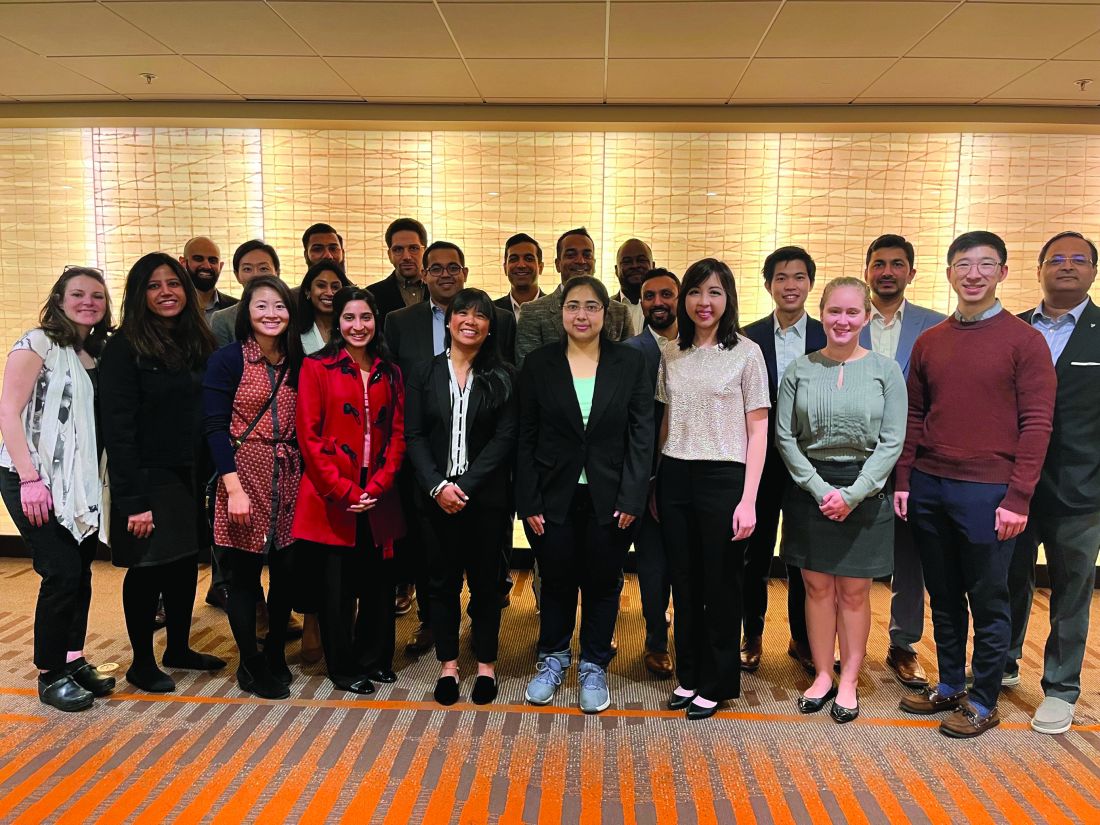
The fellows received an exclusive behind-the-scenes tour of Medtronic’s R&D facility in Santa Clara, Calif., and got to experience hands-on demonstrations of GI GeniusTM, PillCamTM, EndoflipTM, NexpowderTM, BravoTM, BarrxTM and ProdiGITM technologies. The group was also hosted by Boston Scientific Corporation, Castle Biosciences and PENTAX Medical at a dinner that included an innovators panel discussion. The program will continue throughout the year with monthly educational sessions moderated by members of the AGA CGIT committee.
Mohd Amer Alsamman, MD, Georgetown University
Mohammad Arfeen, MD, Franciscan Health Olympia Fields
Alexis Bayudan, MD, University of California, San Francisco
Aileen Bui, MD, University of Southern California
Divya Chalikonda, MD, Thomas Jefferson University Hospital
Alec Faggen, MD, University of California, San Francisco
Sweta Ghosh, PhD, University of Louisville School of Medicine
Hemant Goyal, MD, University of Texas Houston
Averill Guo, MD, Brown University
Omar Jamil, MD, University of Chicago
Christina Kratschmer, MD, Washington University in St. Louis
Thi Khuc, MD, University of Maryland School of Medicine
Anand Kumar, MD, Northwell Health – Lenox Hill Hospital
Xing Li, MD, Massachusetts General Hospital
Alana Persaud, MD, SUNY Downstate Medical Center
Itegbemie Obaitan, MD, Indiana University School of Medicine
Chethan Ramprasad, MD, University of Pennsylvania
Abhishek Satishchandran, MD, University of Michigan
Kevin Shah, MD, Emory University School of Medicine
Shifa Umar, MD, University of Chicago
Kornpong Vantanasiri, MD, Mayo Clinic Rochester
Shaleen Vasavada, MD, Baylor College of Medicine
Highlights from social media
See what else attendees shared with #AGATech on Twitter.
The 2023 AGA Tech Summit was made possible by support from Castle Biosciences and Medtronic (Diamond Sponsors), AI Medical Services, Boston Scientific, Exact Sciences Corporation, FUJIFILM Medical Systems and Olympus Corporation (Gold Sponsors), Cook Medical Inc., and STERIS Endoscopy (Silver Sponsors), and Apollo Endosurgery and EvoEndo (Bronze Sponsors).
AGA takes CRC month to Capitol Hill
Participating in Colorectal Cancer Awareness Month in Washington, D.C., means one thing – taking the fight to save lives from CRC to Capitol Hill and advocating for increased access to screening and research to improve outcomes.
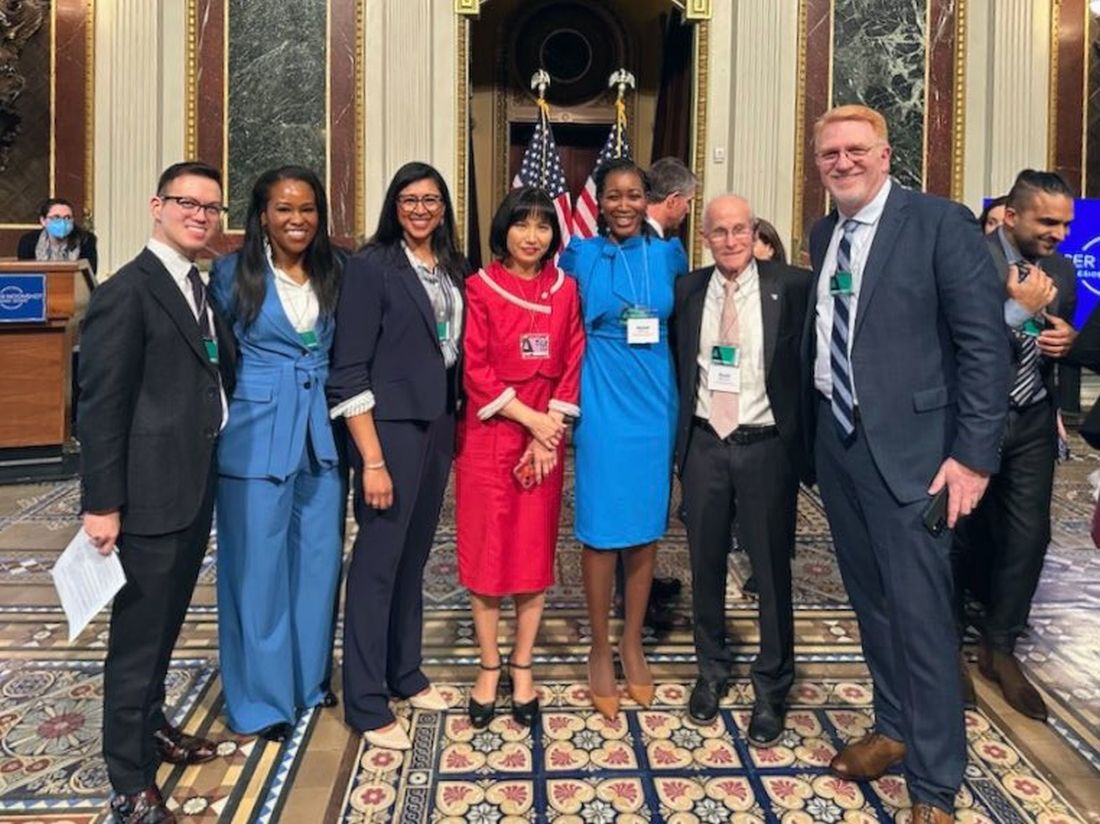
In March, AGA joined the national advocacy organization Fight Colorectal Cancer (Fight CRC) and partners in the colorectal cancer community for events in our nation’s capital. The goal was to destigmatize talking about gut health and CRC and to collaboratively develop solutions that will improve and increase access to CRC screening.
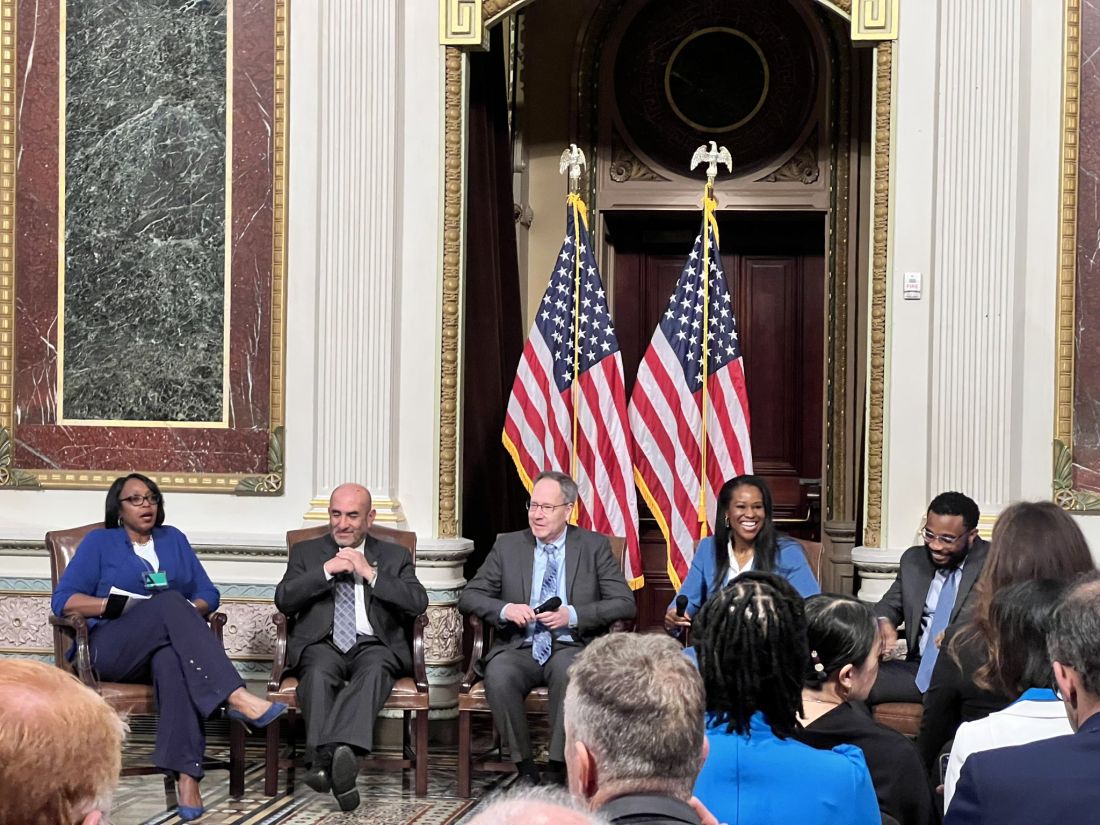
Fight CRC working lunch
Former AGA president Dr. David Lieberman and fellow AGA member and FORWARD graduate Dr. Fola May served as facilitators for the coalition of public and private leaders assembled by Fight CRC. The group is working to develop an action plan to further equitable CRC screening and lower the number of lives impacted by CRC. Among the participants were insurers, industry, federal agencies, healthcare providers, retail businesses, and patients.
White House Cancer Moonshot colorectal cancer forum
In partnership with President Biden’s reignited Cancer Moonshot initiative, we joined Fight CRC and other advocacy and industry leaders in the colorectal cancer community for the Cancer Moonshot Colorectal Cancer Forum, hosted by the White House.
Dr. May participated as a panelist during the forum and discussed how we should address disparities in CRC. “Research dollars are essential in [combating CRC inequity]. We do not know how to effectively deliver care and preventive services to these populations unless we do deep dives into these particular settings to understand how to best deliver that care. This is not a “pick a model and apply broadly” approach. We need to go to the people, and we need to go to the people with the methods that work for that particular setting, and that’s going to be different in every community.”
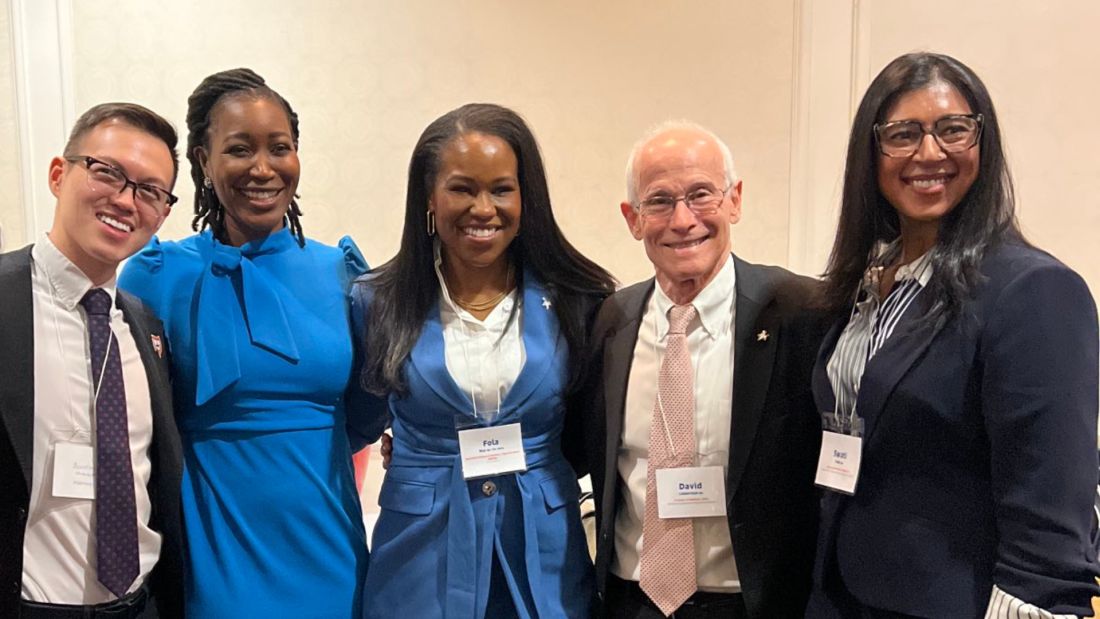
In addition to Dr. Lieberman, who attended on behalf of AGA, fellow AGA members Drs. Austin Chiang, Swati Patel and AGA FORWARD Scholar Rachel Issaka were in attendance. We are appreciative of the opportunity to be included in these important discussions with the Administration and partners in the CRC community as we work together to reduce the burden of CRC and save lives.
Fight CRC United in Blue rally on the National Mall
It’s become an annual tradition for us to join Fight CRC’s United in Blue rally and blue flag installation on the National Mall, and this year was no different. We joined industry and patient advocacy groups in the CRC community to raise our voices about the need for screening, research, and advocacy to improve colon cancer outcomes.
The rally included inspiring calls to action and CRC testimonials from individuals who have been personally impacted by the disease, including Rep. Donald Payne Jr. (D-NJ), who lost his father to CRC and who personally underwent screening, which led to the discovery of 13 polyps.
Dr. Manish Singla from Capital Digestive Care spoke on behalf of AGA and provided encouragement and a reminder for patients and providers.
“What I keep hearing here is patients feel like they’re not being heard – so we’re listening. We’re trying and we’re here to fight the disease with you all. Everyone here knows somebody who is due for a colonoscopy and isn’t getting it, so use your persuasion – talk about it, convince, cajole, shame – use whatever you need so that everyone gets the screenings they need,” Dr. Singla said.
Our work is just beginning: Let’s work together to encourage screenings for colorectal cancer and save lives. Join us as we remind everyone that 45 is the new 50.
Summary content
7 Key Takeaways
-
1
Developed a paper-based colorimetric sensor array for chemical threat detection.
-
2
Can detect 12 chemical agents, including industrial toxins.
-
3
Production cost is under 20 cents per chip.
-
4
Utilizes dye-loaded silica particles on self-adhesive paper.
-
5
Provides rapid, simultaneous identification through image analysis.
-
6
Inspired by the mammalian olfactory system for pattern recognition.
-
7
Future developments include a machine learning-enabled reader device.
The guidelines emphasize four-hour gastric emptying studies over two-hour testing. How do you see this affecting diagnostic workflows in practice?
Dr. Staller: Moving to a four-hour solid-meal scintigraphy will actually simplify decision-making. The two-hour reads miss a meaningful proportion of delayed emptying; standardizing on four hours reduces false negatives and the “maybe gastroparesis” purgatory that leads to repeat testing. Practically, it means closer coordination with nuclear medicine (longer slots, consistent standardized meal), updating order sets to default to a four-hour protocol, and educating front-line teams so patients arrive appropriately prepped. The payoff is fewer equivocal studies and more confident treatment plans.
Metoclopramide and erythromycin are the only agents conditionally recommended for initial therapy. How does this align with what is being currently prescribed?
Dr. Staller: This largely mirrors real-world practice. Metoclopramide remains the only FDA-approved prokinetic for gastroparesis, and short “pulsed” erythromycin courses are familiar to many of us—recognizing tachyphylaxis limits durability. Our recommendation is “conditional” because the underlying evidence is modest and patient responses are heterogeneous, but it formalizes what many clinicians already do: start with metoclopramide (lowest effective dose, limited duration, counsel on neurologic adverse effects) and reserve erythromycin for targeted use (exacerbations, bridging).
Several agents, including domperidone and prucalopride, received recommendations against first-line use. How will that influence discussions with patients who ask about these therapies?
Dr. Staller: Two points I share with patients: evidence and access/safety. For domperidone, the data quality is mixed, and US access is through an FDA IND mechanism; you’re committing patients to EKG monitoring and a non-trivial administrative lift. For prucalopride, the gastroparesis-specific evidence isn’t strong enough yet to justify first-line use. So, our stance is not “never,” it’s just “not first.” If someone fails or cannot tolerate initial therapy, we can revisit these options through shared decision-making, setting expectations about benefit, monitoring, and off-label use. The guideline language helps clinicians have a transparent, evidence-based conversation at the first visit.
The guidelines suggest reserving procedures like G-POEM and gastric electrical stimulation for refractory cases. In your practice, how do you decide when a patient is “refractory” to medical therapy?
Dr. Staller: I define “refractory” with three anchors.
1. Adequate trials of foundational care: dietary optimization and glycemic control; an antiemetic; and at least one prokinetic at appropriate dose/duration (with intolerance documented if stopped early).
2. Persistent, function-limiting symptoms: ongoing nausea/vomiting, weight loss, dehydration, ER visits/hospitalizations, or malnutrition despite the above—ideally tracked with a validated instrument (e.g., GCSI) plus nutritional metrics.
3. Objective correlation: delayed emptying on a standardized 4-hour solid-meal study that aligns with the clinical picture (and medications that slow emptying addressed).
At that point, referral to a center with procedural expertise for G-POEM or consideration of gastric electrical stimulation becomes appropriate, with multidisciplinary evaluation (GI, nutrition, psychology, and, when needed, surgery).
What role do you see dietary modification and glycemic control playing alongside pharmacologic therapy in light of these recommendations?
Dr. Staller: They’re the bedrock. A small-particle, lower-fat, calorie-dense diet—often leaning on nutrient-rich liquids—can meaningfully reduce symptom burden. Partnering with dietitians early pays dividends. For diabetes, tighter glycemic control can improve gastric emptying and symptoms; I explicitly review medications that can slow emptying (e.g., opioids; consider timing/necessity of GLP-1 receptor agonists) and encourage continuous glucose monitor-informed adjustments. Pharmacotherapy sits on top of those pillars; without them, medications will likely underperform.
The guideline notes “considerable unmet need” in gastroparesis treatment. Where do you think future therapies or research are most urgently needed?
Dr. Staller: I see three major areas.
1. Truly durable prokinetics: agents that improve emptying and symptoms over months, with better safety than legacy options (e.g., next-gen motilin/ghrelin agonists, better-studied 5-HT4 strategies).
2. Endotyping and biomarkers: we need to stop treating all gastroparesis as one disease. Clinical, physiologic, and microbiome/omic signatures that predict who benefits from which therapy (drug vs G-POEM vs GES) would transform care.
3. Patient-centered trials: larger, longer RCTs that prioritize validated symptom and quality-of-life outcomes, include nutritional endpoints, and reflect real-world medication confounders.
Our guideline intentionally highlights these gaps to hopefully catalyze better trials and smarter referral pathways.
Dr. Staller is with the Division of Gastroenterology, Massachusetts General Hospital and Harvard Medical School, Boston.