Sameer K. Berry, MD, MBA, comes from a family of GI doctors. As a child, he used to accompany his father when he made rounds at the local county hospital.
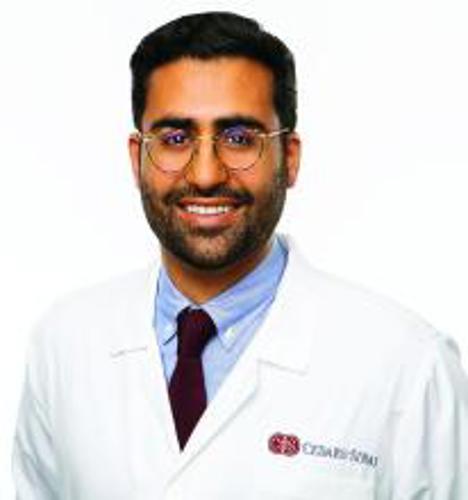
Oshi Health
Dr. Sameer K. Berry
“I was a little kid, so I wasn’t helping him,” but he said he learned a great deal by sitting in the hallways and listening to his father talk to patients. “I could clearly hear the human suffering on the other side.”
This experience had a big impact on Dr. Berry, who continues the family trade. Like his father, talking with patients about their condition is his favorite part of the job, but especially talking about the role of diet, lifestyle, and stress on GI health, said Dr. Berry, who is a gastroenterologist and clinical assistant professor of medicine at New York University’s Grossman School of Medicine.
In addition to his clinical practice, Dr.Berry serves as the co-founder & chief medical officer at Oshi Health. Oshi is an integrative healthcare clinic that is entirely virtual and entirely and solely about GI health. The clinic works with GI clinicians and other healthcare providers, allowing patients access to multidisciplinary care that has proven to reduce healthcare costs and improve patient outcomes. The company was recently named a recipient of funding through the American College of Gastroenterology and the American Gastroenterological Association’s Center for GI Innovation & Technology’s GI Opportunity Fund.
The Oshi model is a whole-person, multidisciplinary GI care model, which includes traditional medical care for GI conditions but also provides access to health coaching, nutrition and diet support, and behavioral and mental health services. Research shows the approach is effective in mitigating symptoms. A 2020 randomized controlled trial published in Lancet Gastroenterology and Hepatology demonstrated that integrated multidisciplinary care led to improvement in symptoms, quality of life, and cost of care for complex GI conditions, as compared with the traditional GI specialist care model. Numerous similar studies have found that integrated care teams were better equipped to meet the needs of patients with inflammatory bowel disease (IBD) and patients with disorders of gut-brain interaction (DGBIs), patient outcomes and satisfaction were better, overall direct and indirect costs were lower and psychological health needs better addressed.
Q: What was the inspiration behind Oshi Health?
Dr. Berry: Gastroenterologists continue to witness unnecessary patient suffering due to antiquated care delivery models and perverse incentives in our healthcare system. Oshi’s care model was designed to align incentives and provide patients with access to clinicians who are traditionally not reimbursed in fee-for-service healthcare while also helping GI practices provide this care to their patients. During my clinical training it was easy for me to order expensive and invasive testing for my patients, but very difficult for me to get them the multidisciplinary care they needed. Many of the patients I would see didn’t need more MRIs, CT scans, or expensive medications. They needed access to a team of clinicians to help with all the aspects of GI care, including diet, behavioral, and medical.
Q: Why is multidisciplinary care the right approach?
Dr. Berry: GI is a very complex field with many nuances that can impact a patient’s symptoms. As physicians, our role is now evolving to oversee a team of clinicians working together to maximize expertise in nutrition and the gut-brain axis. With these new multidisciplinary care models, GI practices can expand their capabilities. At Oshi Health, every single patient has access to a nurse practitioner, dietician, psychologist, and health coach — all overseen by a gastroenterologist — as a covered benefit through their health plan. Providing multidisciplinary care through a virtual-first model solves some of the scalability challenges of these intensive care models and can significantly improve access to care.
Q: What grant-funded clinical research are you doing right now?
Dr. Berry: Most of my research focuses on evaluating the impact of novel care delivery models in GI and the evaluation of digital technologies in GI and how we can incorporate those digital technologies into clinical practice. How can we determine what type of care can be done remotely via video visits? What can be done on the phone or via text messaging? How can we get these new services paid for so patients can reap the benefits of seeing their doctor more frequently?
Q: What teacher or mentor had the greatest impact on you?
Dr. Berry: Dr. John Allen, MD, MBA has had an incredible impact on my career. He’s the former president of the American Gastroenterological Association, and was the chief clinical officer and a professor at the University of Michigan. He’s one of the rare GI doctors that has both a strong clinical and leadership role in GI. I can’t thank him enough for planting the seeds to encourage me to focus on improving the ways we deliver care to patients.
Q: Describe how you would spend a free Saturday afternoon.
Dr. Berry: Roaming around and exploring a new neighborhood either in New York City or anywhere in the world. If I wasn’t going to be a doctor, I’d probably be an anthropologist. I love observing people in their element, and exploring new neighborhoods that are off the beaten path is a great way to do that.
Lightning round! Do you prefer texting or talking?
Texting
What’s high on your list of travel destinations?
Antarctica
Where was your most memorable vacation?
Patagonia
How many cups of coffee do you drink daily?
Four
What’s your favorite holiday?
Halloween
What’s your favorite junk food?
In-N-Out Burger
If you weren’t a gastroenterologist, what would you be?
Anthropologist