A machine learning-based exosomal microRNA (miRNA) liquid biopsy assay demonstrated “remarkable” diagnostic accuracy for the preoperative detection of occult metastases in intrahepatic cholangiocarcinoma (ICC) and was associated with survival outcomes, according to data from the EXOMIC study presented at Digestive Disease Week® (DDW) 2026.

Although curative-intent liver resection is the standard for resectable disease, early postoperative recurrence — often driven by occult metastases undetectable by current imaging — continues to compromise survival, the researchers noted. Existing imaging modalities have limited sensitivity for detecting occult metastasis, and no validated blood-based biomarkers are available to guide preoperative decision-making.
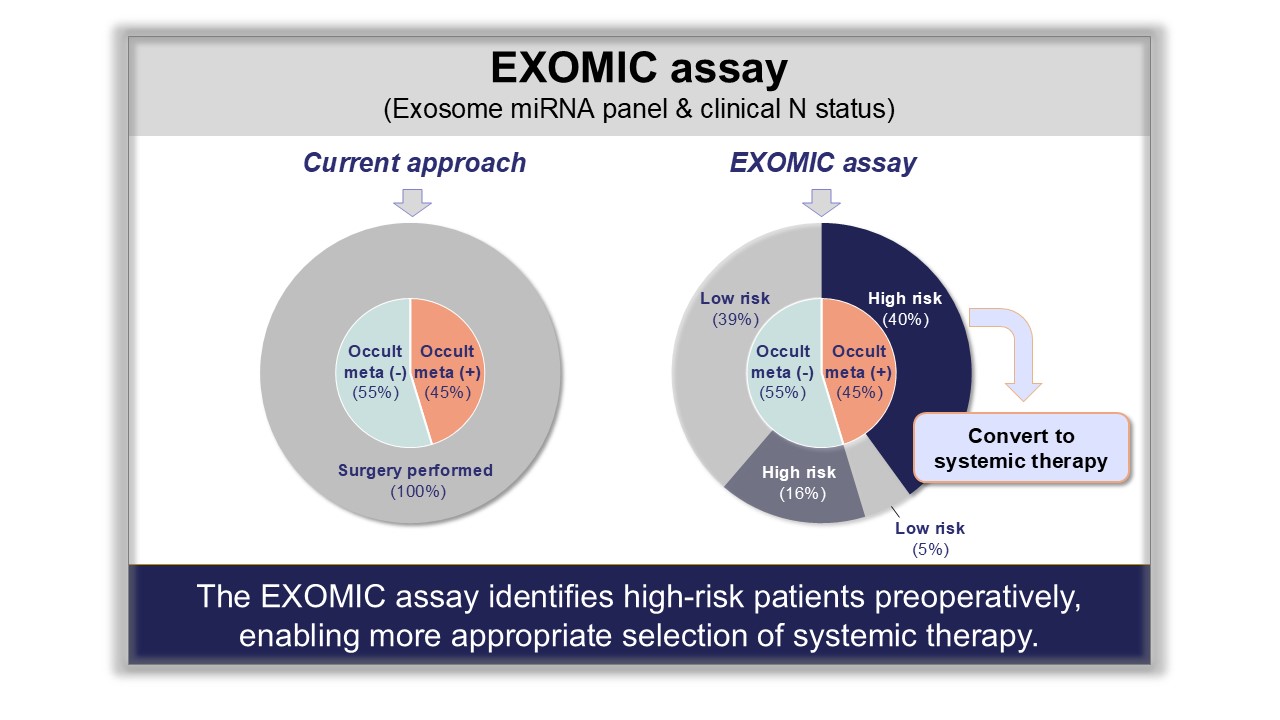
The evaluated assay — called EXOMIC — integrates exosomal miRNA profiles with clinical N status to enable noninvasive detection of occult metastases in patients whose tumors would otherwise be considered resectable based on conventional imaging, presenting author Takayuki Noma, MD, and principal investigator Ajay Goel, PhD, AGAF, both of City of Hope Medical Center, Duarte, California, told GI & Hepatology News. “This provides a practical tool for improving preoperative risk stratification.”
They continued, “In our cohort, nearly half of patients who underwent surgery likely already had [occult metastases]. By applying the EXOMIC assay, clinicians may better identify these high-risk patients preoperatively and consider systemic therapy, potentially avoiding unnecessary surgical interventions.”
Study details
The researchers performed exosomal small RNA sequencing on plasma samples obtained from patients with ICC at clinical stages I to III (n = 40) to identify exosome-derived miRNAs associated with occult metastasis. Candidate biomarkers were identified through differential expression analysis in combination with machine learning-based feature selection.
An exosome-derived miRNA panel was subsequently developed in a training cohort (n = 120) using eXtreme Gradient Boosting (XGBoost) and validated in an independent testing cohort (n = 75). To improve predictive performance and support clinical use, a composite risk-stratification model — the EXOMIC assay — was developed by integrating the exosome-derived miRNA panel with preoperative clinical parameters (i.e., clinical N stage).
Predictive performance

Small RNA sequencing identified a distinct exosome-derived miRNA signature that appeared to be significantly associated with occult metastatic disease. The researchers reported that the XGBoost-trained, exosome-derived miRNA panel showed strong diagnostic performance in the training cohort (area under the curve [AUC] = 0.88; sensitivity = 0.93) and retained high accuracy in the testing cohort (AUC = 0.82; sensitivity = 0.88).
The EXOMIC assay was found to further improve predictive performance. This composite model demonstrated “excellent” diagnostic accuracy in both the training (AUC = 0.89; sensitivity = 0.94) and independent testing (AUC = 0.85; sensitivity = 0.88) cohorts, the researchers wrote. Based on decision curve analysis, the EXOMIC assay provided greater net clinical benefit than the exosome-derived miRNA panel or clinical N stage alone. Patients classified as high risk by the assay had significantly worse recurrence-free and overall survival at three years (both P < .001), which the researchers reported reflects the assay's ability to detect underlying occult metastatic disease biology.
“Although the assay demonstrated strong diagnostic performance across independent cohorts, prospective validation in larger, multicenter studies is required before routine clinical implementation,” Dr. Noma and Dr. Goel concluded in the interview. “Future work should also address assay standardization and real-world feasibility.”
The authors reported having no disclosures.
DDW is AGA's annual meeting, jointly sponsored by AGA, AASLD, ASGE, and SSAT. Learn more at ddw.org.