Patients with inflammatory bowel disease (IBD) were at increased risk for several psychiatric disorders beginning years before their bowel disease was diagnosed. The risk peaked shortly after diagnosis and remained elevated for at least 10 years, according to a nationwide Swedish cohort study. The findings suggest physicians should consider routine mental health assessment throughout the course of IBD, including during the diagnostic workup.
The study, published in Clinical Gastroenterology and Hepatology, analyzed nationwide Swedish registry data from 2007 to 2023 to examine how psychiatric disorders developed before and after an IBD diagnosis. The investigators also compared patients with IBD with their unaffected full siblings to assess whether shared genetic and early-life environmental factors explained the association. Elevated risks persisted in the sibling analyses, suggesting that familial factors accounted for only part of the relationship.
For the population-based analysis, Jiangwei Sun, PhD, of Sun Yat-sen University and Karolinska Institute, and colleagues identified 43,862 patients with biopsy-confirmed IBD who had no history of psychiatric disorders at diagnosis and matched them with 178,821 individuals from the general population by age, sex, county of residence, and calendar year. Patients were followed for a median of 7.4 years. Separate analyses examined psychiatric disorders during the five years before IBD diagnosis and up to 10 years afterward using flexible survival models to estimate how risk changed over time.
The relative risk of developing any psychiatric disorder began to increase about two to three years before IBD diagnosis. It peaked approximately six months after diagnosis, when patients were 50% more likely than matched controls to develop a psychiatric disorder. Although the excess risk declined over time, it remained elevated 10 years after diagnosis, with patients still 19% more likely to receive a psychiatric diagnosis.
Overall, 17% of patients with IBD developed a psychiatric disorder after diagnosis, compared with 13% of matched controls. Over 10 years, this translated to one additional psychiatric disorder for every 31 patients with IBD. The excess risk varied by disease subtype, corresponding to one additional case for every 24 patients with Crohn's disease, 41 with ulcerative colitis, and 21 with IBD-unclassified.
Major depressive disorder, anxiety disorders, and substance misuse accounted for most of the excess psychiatric burden. The risks for depression and anxiety began to increase before IBD diagnosis, peaked shortly afterward, and remained elevated throughout follow-up. Substance misuse also became more common before diagnosis and persisted afterward, particularly among patients with Crohn's disease and IBD-unclassified. Stress-related disorders increased only after IBD diagnosis. By contrast, the investigators found no consistent increase in psychotic disorders, personality disorders, bipolar disorder, or attention-deficit/hyperactivity disorder. Patients also experienced a short-term increase in autism spectrum disorder diagnoses after IBD diagnosis and a higher incidence of eating disorders beginning about five years later.
The overall pattern was similar across Crohn’s disease, ulcerative colitis, and IBD-unclassified, although the associations were generally stronger for Crohn’s disease and unclassified disease than for ulcerative colitis. Patients with adult-onset IBD had elevated psychiatric risk both before and after diagnosis, whereas those with childhood-onset disease experienced increased risk primarily after diagnosis. In subgroup analyses, the highest long-term absolute risks occurred among patients with lower educational attainment, greater health care utilization, childhood-onset disease, or a parental history of psychiatric disorders.
To determine whether milder psychiatric conditions followed similar patterns, the investigators also examined psychotropic medication use among patients diagnosed with IBD since 2010. Use of antidepressants, anxiolytics, hypnotics, and sedatives began increasing about one year before IBD diagnosis, peaked immediately afterward, and remained elevated for at least five years. Patients with IBD were also more likely than matched controls to receive these medications as early as five years before diagnosis. No similar pattern was observed for antipsychotics, mood stabilizers, or medications for attention-deficit/hyperactivity disorder.
A sibling-controlled analysis that included 26,807 patients with at least one unaffected full sibling produced similar results. Although the associations were slightly weaker than those seen in the population-based analysis, patients with IBD remained significantly more likely than their siblings to develop psychiatric disorders both before and after diagnosis. The findings suggest that shared genetic and early-life environmental factors do not fully explain the association.
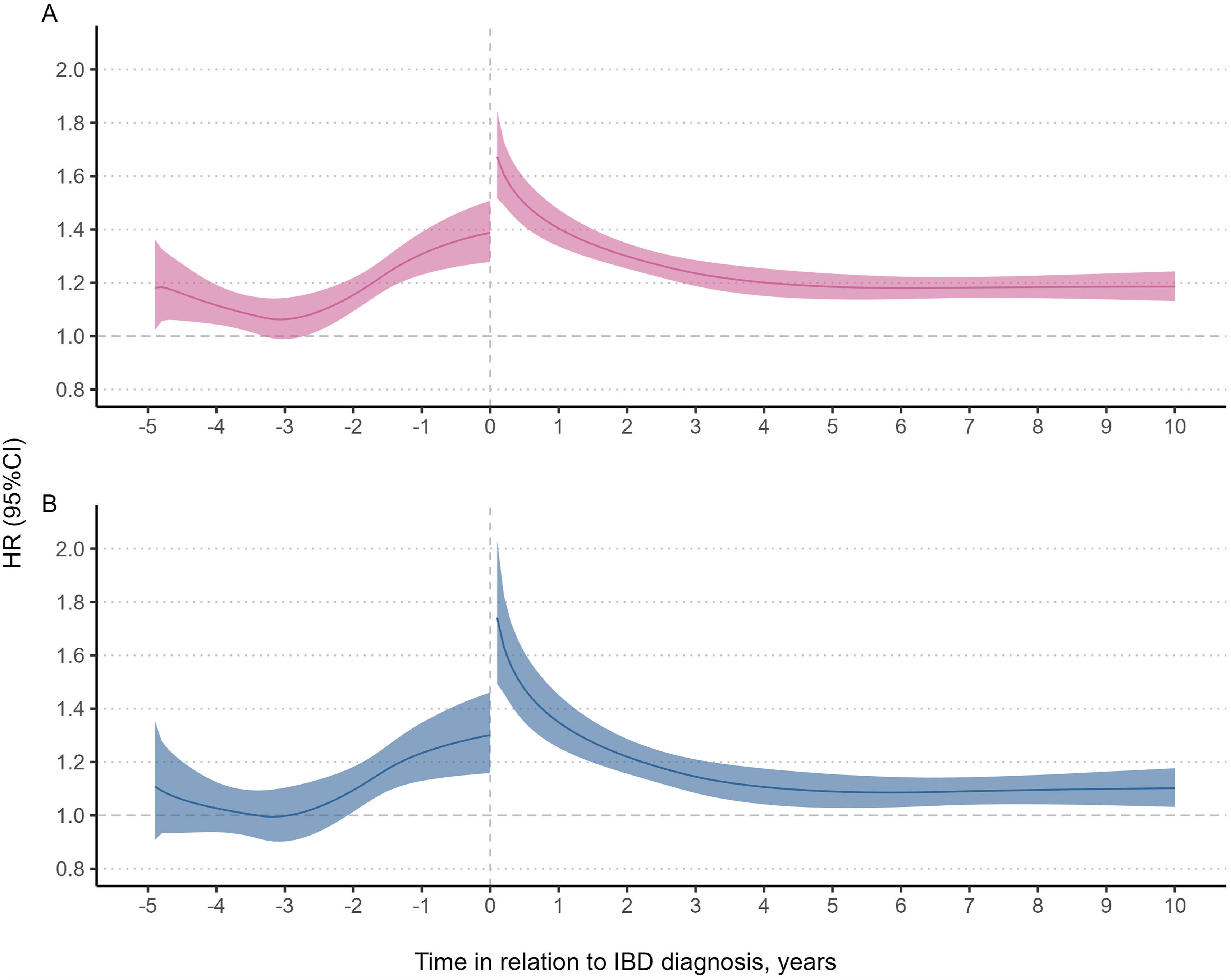
For physicians, the findings suggest that mental health screening should begin during the diagnostic evaluation of patients with suspected IBD and continue long after diagnosis. The authors noted that depression, anxiety, and substance misuse can adversely affect disease management, quality of life, hospitalization risk, the need for surgery, and treatment escalation. They recommended closer collaboration between gastroenterologists and mental health professionals, with routine psychological assessment integrated into IBD care, particularly for patients at highest risk.
The investigators acknowledged several limitations. Because the registry did not capture primary care diagnoses, some milder psychiatric disorders may have been missed. The database also lacked information on disease activity, endoscopic findings, laboratory measures, lifestyle factors, and medication use, preventing the investigators from assessing how disease severity or IBD treatments influenced psychiatric outcomes. As an observational study conducted within Sweden’s health care system, the findings cannot establish causality and may not be fully generalizable to other health care settings.
The study received funding from the Swedish Society for Medical Research, the European Crohn’s and Colitis Organization, the Swedish Society of Medicine, several academic foundations, the National Natural Science Foundation of China, and Sun Yat-sen University. Several authors reported research funding, consulting, advisory, or speaker relationships with AbbVie, Bristol Myers Squibb, Ferring, Galapagos, Janssen, MSD, Pfizer, Takeda, and other pharmaceutical companies.

Expert Insight
GI & Hepatology News invited Dr. Sun to elaborate on the study results.
One of the most striking findings was that the risk of psychiatric disorders began increasing two to three years before patients were diagnosed with IBD. What do you think explains that pattern, and what does it tell us about the preclinical phase of IBD?
Dr. Sun: The clearly elevated risks observed in the pre-diagnostic period may reflect the impact of subclinical inflammation, GI symptoms, and psychological stress experienced years before IBD diagnosis and during diagnostic workup, which is supported by earlier observations of up-regulated inflammatory proteins, dysregulated antibodies and proteins, increased intestinal permeability, gut dysbiosis, and a substantial symptomatic period preceding IBD diagnosis. For diagnostic delay, because diagnostic delay of IBD is usually less than one year after symptom onset, it may not fully explain the elevated pre-diagnostic risk.
Your study found that the excess risk persisted for up to 10 years after diagnosis and was not fully explained by shared familial factors. From a clinical standpoint, how should gastroenterologists incorporate these findings into long-term care for patients with IBD?
Dr. Sun: First, these results suggest that shared genetics and early environmental factors cannot fully explain the observed associations between IBD and psychiatric disorders. Second, such long post-diagnostic risk of psychiatric disorders highlights the importance of integrating psychological care into IBD routine practice and including mental illness assessment and management in IBD guidelines.
Although you observed increased risks for depression, anxiety, and substance misuse, you did not find similar long-term increases for several other psychiatric disorders. What do these differences suggest about the relationship between IBD and mental health, and where should future research focus?
Dr. Sun: No association of IBD with psychotic disorders, bipolar disorder, personality disorders, and ADHD was observed. These findings align with previous studies from the UK and Denmark. Since there exists heterogeneity between different mental disorders, we did not expect the association to exist for different mental disorders, which is good news for patients.
In the future, given the elevated pre- and post- diagnostic risk of psychiatric disorders, health care providers should maintain vigilance for psychiatric symptoms in patients with IBD, particularly for major depressive disorder, anxiety disorders, and substance misuse. Since depressive symptoms and anxiety could complicate IBD management, predict adverse clinical outcomes (e.g., flare, escalation of therapy, hospitalization, surgery), and cause lower quality of life and death, organizing care to enable interaction between gastroenterologists and mental health professionals is essential for early identification of high-risk populations for adverse outcomes. For high-risk individuals (e.g., childhood-onset IBD, those with ≤9 years of education, and those with parental psychiatric disorders), psychotherapy or pharmacotherapy may be considered to alleviate short-term anxiety or depressive symptoms. However, their impact on improvement of IBD itself remains uncertain.