Endoscopic ultrasound-guided radiofrequency ablation was associated with complete or partial radiographic response in most small nonfunctioning pancreatic neuroendocrine tumors (NF-PanNETs) in a retrospective multicenter study, suggesting the procedure may offer a nonsurgical option for carefully selected patients.

“This is a novel technology for treatment of a disease that we really haven’t had too many treatment options for,” corresponding author Tamas A. Gonda, MD, director of the pancreatic disease program in the division of gastroenterology and hepatology at NYU Langone Health, told GI & Hepatology News in an interview. “It turns out to be a rather effective and, most importantly, a very safe treatment to offer patients.”
The retrospective study, published in Techniques and Innovations in Gastrointestinal Endoscopy, included 46 patients with biopsy-confirmed, NF-PanNETS treated at seven tertiary referral centers between 2021 and 2024. The procedure was successful in every patient, and 91% ultimately had either a complete or partial response on follow-up imaging after an average of nearly 16 months.
Dr. Gonda and colleagues evaluated endoscopic ultrasound-guided radiofrequency ablation in 46 patients with tumors smaller than 3 cm. Most tumors were incidentally detected, well-differentiated grade 1 lesions averaging 12.7 mm in diameter, and all patients had localized disease without metastases.
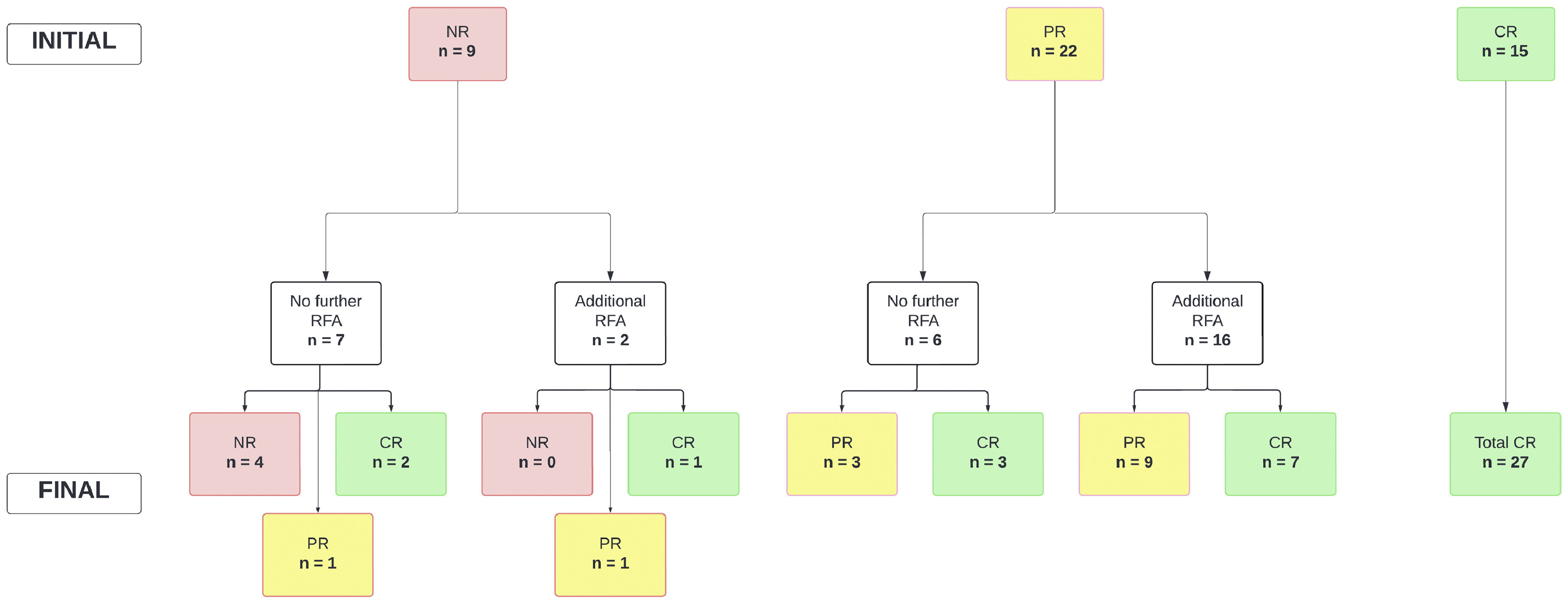
Patients received an average of 2.9 radiofrequency applications during the initial procedure. At the first follow-up scan, performed an average of 4.5 months later, 33% had a complete response, 48% had a partial response, and 20% had little or no response. Patients whose tumors did not completely respond could undergo another ablation procedure or continue with imaging surveillance.
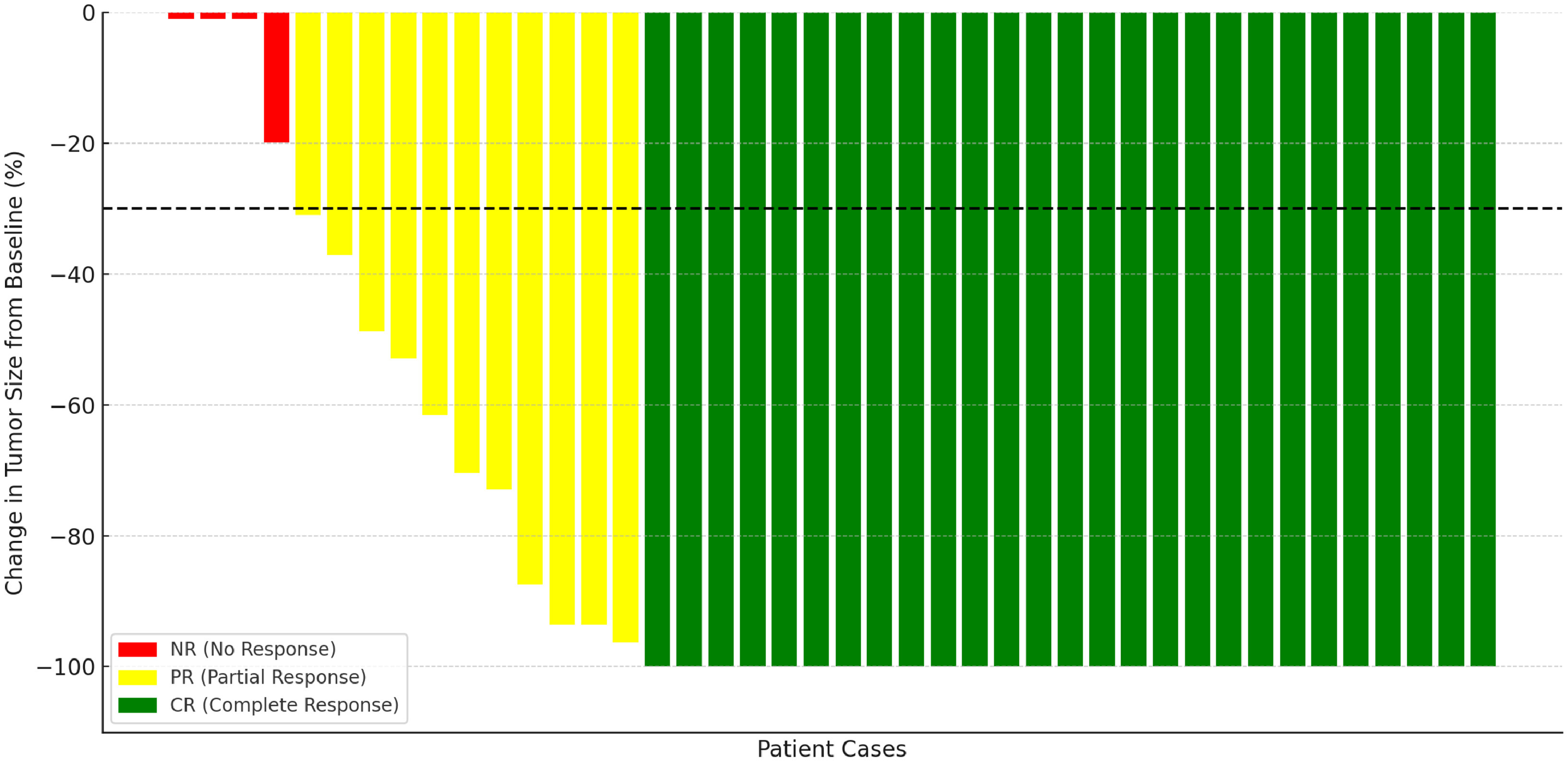
Among the 31 patients whose tumors showed only a partial response or no response after the first procedure, 18 underwent repeat EUS-RFA, usually requiring just one additional session. By the final follow-up, 60% had a complete response, 31% had a partial response, and 9% had no response. Tumor size decreased by an average of 72%. Five patients whose tumors were not completely eradicated after the initial procedure went on to achieve a complete response without additional treatment.
The investigators also looked at which procedural factors were associated with better outcomes. Using a seven- or 10-mm probe tip increased the odds of a complete response at the first follow-up by more than fivefold compared with a five-mm tip. Performing more radiofrequency applications increased the odds by about 2.6 times. However, these factors were no longer associated with outcomes at the final follow-up, and tumor size, grade, location, and cystic features also did not predict long-term response.
Adverse events occurred in seven patients, representing 15% of the study population. Most were mild and consisted of abdominal pain or pancreatitis. One patient developed pancreatitis complicated by pancreatic duct stricture and a pseudocyst that required distal pancreatectomy, and another experienced grade III bleeding that required hospitalization. No adverse events occurred after repeat ablation procedures.
For physicians, the findings suggest EUS-RFA may be an effective option for selected patients with small, localized NF-PanNETS who want to avoid surgery or are not good surgical candidates. The results also suggest that using longer probe tips and performing more ablation applications may improve early treatment response, although prospective studies are needed to determine the best treatment approach.
The authors acknowledged several limitations, including the retrospective multicenter design, differences in procedural techniques and follow-up imaging, the lack of standardized periprocedural care, and the relatively small sample size.
If larger studies confirm the findings, the results could shift the management of small NF-PanNETs from observation to intervention, Dr. Gonda said. He likened the potential change to the evolution of colonoscopy from a purely diagnostic procedure to one that prevents cancer by removing precancerous lesions. “It's equivalent to shifting from a diagnostic colonoscopy where you say, ‘Yes, this person has polyps,’ to a colonoscopy where you actually remove the polyps and interrupt that precancerous development,” he said. “If replicated and adopted, I think this could be really a shift in how we manage these type of tumors.”
The study received partial support from the Hirschberg Foundation for Pancreatic Cancer Research. Dr. Gonda disclosed receiving research funding from Taewoong Medical. Coauthor SriHari Mahadev, MD, MBBS, reported consulting relationships with Boston Scientific and Conmed. The remaining authors reported no relevant conflicts of interest.

Expert Insight
GI & Hepatology News invited Jad AbiMansour, MD, a gastroenterologist at Mayo Clinic in Rochester, Minn., with advanced training in complex endoscopic procedures, to comment on the study results.
What makes this study important?
Dr. AbiMansour: Endoscopic ultrasound (EUS)-guided ablation of pancreatic tumors offers a promising organ-sparing, minimally invasive way to treat pancreatic tumors. Radiofrequency ablation has become the preferred modality in many centers due to advances in technology and technique, however data on efficacy, safety, and patient outcomes are limited. We have some data for functional pancreatic neuroendocrine tumors (PNETS), such as insulinomas, however data for non-functional neuroendocrine tumors (NF-PNETS) is limited. NF-PNETs are often relatively indolent, slow growing, and being detected at increasing frequency due to the use of cross-sectional imaging. This may make them particularly good targets for ablation as opposed to pancreatic resection which carries significant morbidity and mortality.
How might the findings influence clinical practice?
Dr. AbiMansour: This study provides important preliminary data on the practical application of EUS-RFA technology for the treatment of NF-PNETs. The treatments were technically successful in all cases, with a complete response rate of 60% overall. However, the preliminary nature of this study will most importantly inform future research as well as shared decision-making conversations with patients. Other notable findings include that over half of patients required more than one session, which is important to discuss and plan for prior to initiating therapy. Adverse events occurred in about 15% of patients. Pancreatitis is often considered the most feared complication of EUS ablation, which occurred at a rate of 7%. While this is not insignificant, most adverse events were mild to moderate.
What research should come next?
Dr. AbiMansour: Continued innovation in techniques and dedicated devices for EUS ablation is necessary. It remains unclear if alternative ablation technologies (e.g., microwave, elecroporation) can provide effective and safer treatment. Identifying patients who would benefit most is another important area for investigation, particularly for NF-PNETs. In current clinical practice, these lesions undergo surveillance until they reach 2cm in size at which time they are referred for consideration of surgery. Even if we could provide a completely safe and effective treatment, which patients should undergo EUS-ablation? Should we be proactive and treat all lesions regardless of size if we can provide safe and effective therapy, or should therapy be reserved for those at risk for locoregional involvement and metastasis (i.e., lesions 2cm in size or greater)?
Dr. AbiMansour reported having no disclosures.