Using narrow-band imaging during screening colonoscopy cut the miss rate for sessile serrated lesions by more than half compared with white light imaging in a large multicenter randomized tandem trial. The findings, published in Clinical Gastroenterology and Hepatology, suggest the technique could help lower the risk for post-colonoscopy colorectal cancer.

“This study addresses a critical gap in colorectal cancer (CRC) prevention,” one of the study’s authors, Yu Bai, MD, PhD, Vice Director of the Department of Gastroenterology at Changhai Hospital, Naval Medical University, China, told GI & Hepatology News. “A primary precursor lesion of CRC, sessile serrated lesion (SSL) is extremely difficult to detect due to the flat, subtle morphology. While narrow-band imaging (NBI) is known to improve adenoma detection, whether NBI can reduce sessile serrated lesion (SSL) miss rate is not clear.”
To evaluate whether NBI can reduce the sessile (SSL) miss rate compared with white light imaging (WLI), Dr. Bai and colleagues across 15 Chinese endoscopy centers randomly assigned 843 patients undergoing colorectal cancer screening to first-pass colonoscopy with either NBI or WLI, followed immediately by a second examination using the alternate modality.
The main goal was to measure how often SSLs were missed. Researchers also looked at how often proximal serrated polyps and adenomas were missed, adenoma and SSL detection rates, and whether the findings changed surveillance recommendations.
Among 112 SSLs identified during tandem colonoscopy, the miss rate was 18% in the NBI-first group vs 44% in the WLI-first group, a rate “much higher than prior estimates, highlighting how often these precancerous lesions are overlooked in routine practice,” Dr. Bai said. Patients examined first with NBI also had lower miss rates for proximal serrated polyps, 19% vs 41%, and adenomas, 20% vs 30%.
NBI was associated with lower miss rates across lesion subtypes, according to the study. For SSLs measuring 5 mm or smaller, miss rates were 17% with NBI vs 52% with WLI. Flat or sessile lesions were also less likely to be missed with NBI, at 18% vs 43%.
Researchers found lower miss rates in both the proximal and distal colon, as well as for lesions with normal-appearing surface patterns.
Even though fewer lesions were missed, the detection rates during the first exam were not significantly different between the groups. Adenoma detection rates were 46% with NBI and 42% with WLI, while SSL detection rates were 9% and 6%, respectively.
A multivariable analysis showed that NBI was the only factor independently linked to fewer missed sessile serrated lesions, lowering the odds by about 76%. More experienced endoscopists and better bowel preparation were also linked to lower miss rates in univariate analyses, but those factors were no longer significant after adjustment.
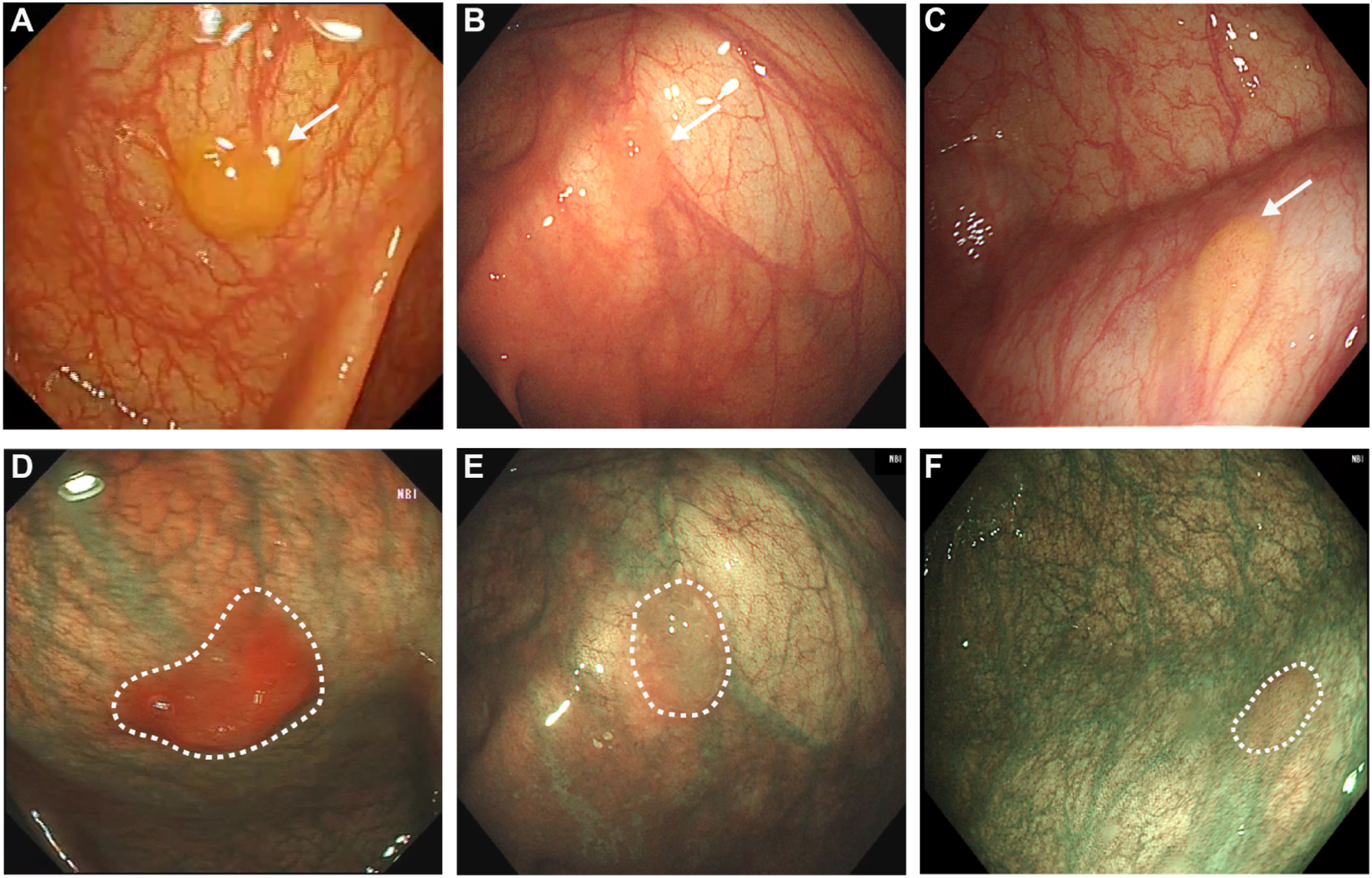
“Combined with our findings for both adenomas and SSLs, our study is the first to demonstrate that NBI can significantly reduce the miss rate for most major precursors of CRC, highlighting its promising value for improving colonoscopy quality,” Dr. Bai said. “Although routine NBI use during withdrawal has not been widely recommended in clinical practice, our data support that targeted NBI examination may be considered for high-risk populations (such as those with serrated polyposis syndrome) and high-risk locations (especially the proximal colon) where SSLs are most frequently missed.”
The study also examined how additional lesion detection affected surveillance recommendations. Under United Kingdom guidelines, the proportion of patients advised to undergo more intensive surveillance increased from 6% with WLI to 12% with NBI.
No severe adverse events occurred. All procedures were performed by experienced endoscopists using high-definition Olympus systems, and all pathology specimens underwent centralized blinded review using 2019 World Health Organization criteria to reduce misclassification of serrated lesions.

Davide Massimi, MD, PhD, a therapeutic endoscopy consultant at IRCCS Humanitas Research Hospital in Milan, Italy, who was invited to comment on the study, said that three nuances warrant consideration before interpreting the findings as support for routine NBI in screening. “First, detection rates did not move significantly,” he said. “NBI added lesions to already-positive patients rather than identifying new positive patients, which limits its effect on individual risk stratification.”
Second, every missed SSL was smaller than 5 mm and none harbored dysplasia. “The clinically significant serrated polyp miss rate (lesions ≥10 mm or >5 mm proximal to the sigmoid) was unchanged,” Dr. Massimi said. “Cutting the miss rate of the lesions that biology suggests are least likely to drive interval cancer is meaningful, but it is not the same as cutting the miss rate of the lesions that matter most.”
Third, surveillance recommendations shifted only under United Kingdom guidance, whereas AGA recommendations remained largely unchanged.
In his view, the study offers several practical takeaways for clinical endoscopy, starting with the idea that NBI should be used selectively rather than routinely for all patients. “Targeted second-pass NBI in the proximal colon is defensible for patients with prior SSL, serrated polyposis syndrome, prior postcolonoscopy CRC, or first-degree family history of right-sided colorectal cancer, and for centers below SSL detection rate or proximal serrated polyp detection rate benchmarks,” Dr. Massimi said.
Second, treat bowel preparation as a precondition. “Dark red residue under NBI degrades visibility; the benefit observed here required a mean Boston Bowel Preparation Scale of 7.5 and aggressive washing,” he said.
Third, train specifically for SSL recognition. “The trial standardized SSL training before enrollment,” he said. “Without it, the optical gain is diluted.”
In clinical practice, Dr. Massimi added, a meaningful proportion of what is attributed to endoscopist miss may reflect local-level pathologist misclassification of SSLs as hyperplastic polyps.
“Without harmonized pathology reading, published SSL detection rates across centers are not directly comparable, and the benchmark probably deserves recalibration,” he said. “Imaging upgrades such as NBI will not solve a classification problem; reading-room standardization must move in parallel.”
Dr. Bai and his coauthors noted several limitations of the analysis, including inability to blind endoscopists to imaging modality and use of the same physician for both tandem examinations, which may have introduced observer bias.
The authors and Dr. Massimi reported no conflicts of interest. The study was funded by multiple Chinese national and regional research programs, including the China National Postdoctoral Program for Innovative Talents and the Shanghai Sailing Program.