The arc of the gastroenterology career of Byron L. Cryer, MD, is not defined by a single achievement, but by a steady accumulation of purpose-driven work spanning clinical care, scientific discovery, mentorship, and leadership. As he prepares to assume the presidency of AGA, Dr. Cryer stands as a figure whose influence reflects both intellectual rigor and a deeply rooted commitment to people. His journey, shaped long before he entered medicine, offers a compelling portrait of how values, opportunity, and vision can converge to produce enduring impact.
Dr. Cryer’s story begins with a foundation grounded in family, migration, and generational resilience. His parents were raised in Louisiana farming communities, where hard work and perseverance were not abstract ideals but daily necessities. Seeking broader opportunities, they settled in Miami, Florida. That decision, like many made quietly by families striving for progress, would shape the trajectory of their children’s lives.
Growing up in Miami, Dr. Cryer was immersed in a culturally rich and diverse environment that broadened his worldview early. By the age of six, he had begun speaking Spanish, eventually achieving fluency. This early exposure to multiple cultures fostered an adaptability and ease of communication that would later distinguish him as both a clinician and a leader. It also instilled a perspective that would inform his lifelong commitment to equity and inclusion within medicine.

Before medicine, Dr. Cryer’s first discipline was music. A child prodigy of remarkable focus, he became a concert violinist at the age of six, performing publicly while most children were just beginning to explore structured learning. His musical pursuits expanded to include piano and trumpet, but more importantly, they cultivated habits of precision, discipline, and pattern recognition. For Dr. Cryer, music was not merely an early interest but a framework for thinking. The transition from music to science, when it came, felt less like a pivot and more like a natural evolution, as both demanded rigor, creativity, and comfort with complexity.
Raised in the post–civil rights era, Dr. Cryer internalized a message that knowledge carried obligation: to act with integrity, to contribute meaningfully, and to help build institutions that expand opportunity for others. These principles have spanned his career, particularly in his work in mentorship and workforce development.
Dr. Cryer pursued his undergraduate studies at Harvard University, concentrating in biology, before enrolling at Baylor College of Medicine. Initially, his path within medicine was not predetermined. Like many students, he explored broadly, open to possibilities. Yet a single moment would alter the course of his career.
During his second year of medical school, Dr. Cryer attended a lecture delivered by Fred Sutton, MD — an African American gastroenterologist. Until that point, Dr. Cryer has not seen an African-American faculty member at his medical school. The impact of that one-hour lecture was immediate and profound. It crystallized not only his interest in gastroenterology, but also his understanding of representation and its power to shape aspirations. By the end of the lecture, he had decided on his specialty.
That moment would reverberate throughout his career, informing a deep commitment to mentorship and leadership development. For Dr. Cryer, the experience reinforced a simple but powerful truth: inspiration does not always come from grand gestures. It can emerge from a single, visible example of possibility.
A second pivotal experience followed during his residency, when he attended lectures on the emerging role of pharmacologic agents in preventing NSAID–induced gastrointestinal injury. The concept of gastroprotection captured his curiosity. Soon after, he sought mentorship from Mark Feldman, MD, at the University of Texas Southwestern Medical Center, ultimately moving to Dallas to pursue fellowship training.
This decision marked the beginning of a career-long focus on the gastrointestinal effects of medications, particularly NSAIDs and aspirin. Over the ensuing decades, Dr. Cryer would become an internationally recognized authority in this domain. His body of work, comprising more than 150 peer-reviewed publications, spans translational science, clinical trials, epidemiology, and biomarker research. At a time when NSAIDs were among the most widely used medications worldwide, his research helped clarify both their benefits and their risks, advancing a more nuanced, patient-centered approach to care.
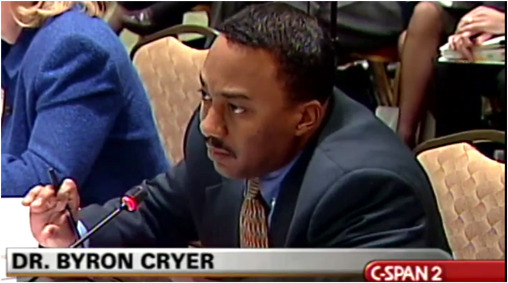
Rather than advocating for simplistic conclusions, Dr. Cryer’s work emphasizes balance — risk stratification, individualized decision-making, and evidence-based mitigation strategies. His expertise extends beyond academia into national policy, including service on the U.S. Food and Drug Administration’s Gastrointestinal Advisory Committee and as a consultant to the agency’s Center for Drug Evaluation and Research. In these roles, he became known for his ability to communicate complex clinical issues with clarity and precision, helping shape conversations around medication safety at the highest levels.
Dr. Cryer is currently with Baylor University Medical Center, where he serves as chair of internal medicine and holds the Ralph Tompsett Endowed Chair in Medicine. In this role, he operates at the intersection of academic medicine and large-scale clinical practice, bringing a systems-oriented approach to leadership that reflects decades of experience.
Dr. Cryer’s relationship with AGA spans more than three decades, beginning during his fellowship in 1989. Over the years, he has contributed across nearly every dimension of the organization’s mission. His leadership roles have included service on the AGA Institute Governing Board, chairing the Underrepresented Minority Committee, and co-leading initiatives such as the AGA Equity Project and the Future Leaders Program. Through these efforts, he has helped shape pipelines for leadership development and broaden participation within the field.
As he steps into the presidency of AGA, Dr. Cryer brings not only a distinguished record of achievement, but also a leadership philosophy shaped by decades of experience and guided by enduring values. His approach is not defined by singular vision alone, but by stewardship.
This Member Spotlight is adapted from an article published in Gastroenterology by Rhonda F. Souza, MD, and Stuart J. Spechler, MD, AGAF, FACG.
Lightning Round
What is your favorite GI organ and why?
The stomach, because it sits at the crossroads of physiology, pharmacology, and clinical impact. It’s where some of the most elegant translational science has occurred, from acid suppression to H. pylori, and where therapeutics have fundamentally changed patient outcomes. It’s also where I’ve spent much of my academic career, so there’s both intellectual and personal investment.
What is the best piece of advice you’ve given or received?
“Be intentional about your trajectory. If you don’t define your path, someone else will define it for you.” That advice shaped how I approached leadership, research, and national engagement. I often translate that into mentoring others: find your lane, own your story, and deliver consistently.
What topic could you give a 30-minute speech on with no preparation?
The future of gastroenterology at the intersection of clinical excellence, innovation, and leadership, particularly how AI and emerging technologies will reshape how we deliver care, train physicians, and measure outcomes. I could also do the same on NSAID-related GI injury and prevention without much effort.
What is your favorite way to unwind after work?
For me, exercising creates a separation from the clinical and administrative intensity of the day. I start my days very early in the mornings, typically well before sunrise. For that reason, by the end of the workday my brain is exhausted, and I can’t further mentally challenge it. Therefore, exercising allows me to turn my brain off and do something entirely different than I have done all day.
If you could have dinner with anyone, who would it be and why?
I’d choose a small dinner with a mix of people rather than a single individual. First on the list would be someone like Atul Gawande, a Harvard surgeon and public health leader. I would invite him for a dialogue that would sharpen how to take big ideas (AI, quality, leadership) and actually embed them into everyday clinical practice at scale. I would also invite Yo-Yo Ma for the intersection of discipline and artistry, and a pioneering GI figure like Barry Marshall. That kind of cross-disciplinary conversation is where the most interesting ideas tend to emerge.
Who inspires you and why?
I’ve been shaped by mentors who combined intellectual rigor with humility, people who were not only outstanding clinicians and scientists, but also deeply committed to developing others. That combination of excellence and generosity is what I try to model in my own leadership roles.
What’s a recent breakthrough or technology in the field you’re excited about?
AI in endoscopy and clinical workflows. Not just detection algorithms, but systems that can augment decision-making, improve efficiency, and ultimately standardize high-quality care across environments. If AI is implemented thoughtfully, it has the potential to elevate both performance as gastroenterologists and patient outcomes at scale.