New joint clinical practice guidelines from AGA and the American Association for the Study of Liver Diseases (AASLD), published in Gastroenterology and Hepatology, emphasize early diagnosis, individualized risk stratification, and timely treatment escalation for adults with primary biliary cholangitis (PBC).
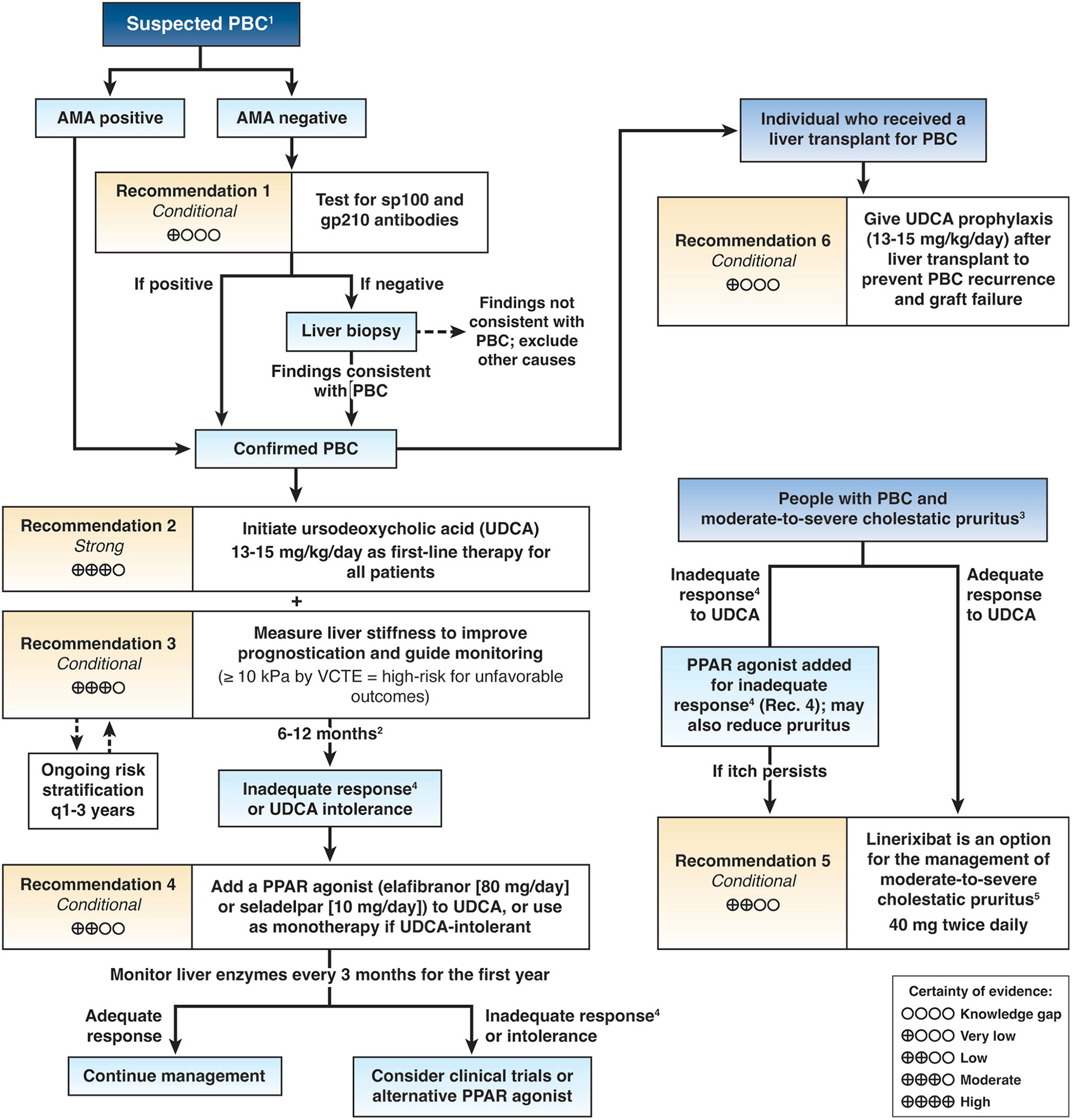
The guidelines establish six evidence-based recommendations covering the management of PBC, from identifying antimitochondrial antibody (AMA)-negative disease to preventing recurrence following liver transplantation. Although ursodeoxycholic acid (UDCA) remains the cornerstone of PBC treatment, up to 40% of patients do not achieve an adequate biochemical response to it, according to the guidelines. The recommendations address newer agents such as peroxisome proliferator-activated receptor (PPAR) agonists, noninvasive prognostic tools, and symptom-directed therapies, with the stated aim of slowing disease progression, improving transplantation-free survival, and enhancing quality of life.
“A critical mission of the new guidelines is to provide information about the proper use of second-line therapy for PBC with PPAR agonists,” guideline author David N. Assis, MD, an associate professor of medicine (digestive diseases) at Yale School of Medicine in New Haven, Connecticut, told GI & Hepatology News. “The guidelines specify that patients who do not show adequate response to first-line ursodeoxycholic acid by 6-12 months of therapy, or who do not tolerate UDCA, should receive second-line therapy with a PPAR agonist.”
The 11-member multidisciplinary guideline panel conducted systematic reviews addressing six prioritized clinical questions. Using the Grading of Recommendations Assessment, Development and Evaluation framework, the panel evaluated evidence from randomized clinical trials, observational cohorts, and diagnostic accuracy studies, prioritizing patient-important outcomes such as hepatic decompensation, transplantation, mortality, and serious adverse events. The certainty of evidence supporting the recommendations ranged from moderate to very low, with only the recommendation for first-line UDCA in people with treatment-naive PBC receiving a strong designation.
Diagnosis and prognosis
For patients with suspected PBC who test negative for AMA, the guidelines conditionally recommend testing for anti-sp100 and anti-gp210 antibodies before considering liver biopsy. Both antibodies were highly specific (pooled specificity, 96.5% and 99.0%, respectively) but insensitive (22.7% and 19.7%). Positive results in appropriately selected patients may eliminate the need for biopsy, but negative results should not prevent further investigation when clinical suspicion remains high, the panel wrote.
The guidelines also conditionally recommend measuring liver stiffness to improve prognostication (moderate certainty of evidence). In three retrospective cohort studies of 3,698 patients, each 1-kPa increase in liver stiffness measurement (LSM) by vibration-controlled transient elastography was associated with a 7% higher hazard of a composite of hepatic decompensation, liver transplantation, or death. The panel called an LSM of 10 kPa or greater a reasonable consensus threshold for increased risk, potentially warranting closer monitoring or treatment escalation.
“I believe that the recommendation to risk stratify patients based on measurement of LSM will impact everyday clinical practice,” said Dr. Assis. “Patients understandably want to know the level of severity of their disease and the potential for future progression. The recommendation to obtain LSM and the cutoff of 10 kPa as designating higher-risk cases can provide patients and clinicians with practical knowledge to guide counseling and management.”
When should treatment be escalated?
The guidelines strongly recommend UDCA, dosed at 13-15 mg/kg/day, for all patients with newly diagnosed PBC (moderate certainty). Although randomized evidence for reductions in mortality and transplantation remains inconclusive, UDCA improved biochemical markers and reduced histologic progression. In a Global PBC Study Group analysis of 3,902 people, UDCA use was associated with a lower risk of liver transplantation or death (hazard ratio, 0.46). The guidelines indicate that patients with an incomplete biochemical response should continue UDCA rather than stop, with adjunctive second-line therapy considered while background UDCA is maintained.
The guidelines advise assessing biochemical response between six and 12 months after treatment initiation. For patients with inadequate response or intolerance, the societies conditionally recommend the PPAR agonists elafibranor and seladelpar (as an adjunctive treatment to UDCA if there is an inadequate response, or, in cases of UDCA intolerance, as an alternative monotherapy), based on low-certainty evidence. Compared with placebo, elafibranor (relative risk [RR], 6.26) and seladelpar (RR, 4.20) increased biochemical response — 387 and 529 additional responders per 1,000 treated, respectively.
“The proper use of second-line therapy with PPAR agonists constitutes a practical, and important, set of recommendations to clinicians,” Dr. Assis noted. “This may be especially helpful for clinicians who experience the whiplash of having a prior medication, obeticholic acid, recently withdrawn from the market due to lack of efficacy and safety concerns.”
However, the panel emphasized that these improvements primarily reflect surrogate biochemical outcomes, with limited evidence demonstrating corresponding reductions in hepatic decompensation, transplantation, or mortality. The panel wrote that therapeutic decisions should rest on an integrated assessment of disease activity, liver stiffness, patient age, comorbidities, symptoms, and individual preferences rather than rigid thresholds alone. The guidelines also advise against PPAR agonist use during pregnancy or breastfeeding, or in patients with decompensated cirrhosis, due to lack of available safety and efficacy data.
Addressing pruritus and post-transplant recurrence
Recognizing the considerable symptom burden associated with PBC, the guidelines conditionally recommend linerixibat — an ileal bile acid transporter inhibitor and, according to the panel, currently the only FDA-approved treatment for PBC-related pruritus — as an option for moderate to severe cholestatic pruritus. Across two randomized trials of 296 participants, linerixibat produced a small reduction in itch severity vs. placebo: 0.78 points on the 11-point Worst Itch Numerical Rating Scale. However, it was also associated with a higher risk of diarrhea (RR, 3.57) and abdominal pain (RR, 3.67), highlighting the importance of shared decision-making when balancing symptom relief against gastrointestinal adverse effects.
For patients undergoing liver transplantation because of PBC, the societies also conditionally recommend initiating prophylactic UDCA at 13-15 mg/kg/day as soon as possible after transplantation. The recommendation was based on two retrospective cohorts of 1,084 patients; in the larger study, UDCA prophylaxis was associated with a lower risk of graft failure (RR, 0.35), though pooled data showed no clear reduction in recurrence. Certainty was very low because of methodological limitations and the absence of randomized trials.
What do these recommendations mean for clinical practice?
The authors wrote that the recommendations support a personalized approach to PBC care, but several evidence gaps remain and PBC pathogenesis is still only partially understood.
“We know that patients with PBC may have prominent, and sometimes overwhelming, fatigue, and unfortunately biochemical responses to anti-cholestatic therapies are not effective in improving fatigue symptoms,” Dr. Assis explained. “This appears to be a centrally mediated symptom that also involves the immune system. Therefore, there is a great need to develop and test new approaches to reduce fatigue in our patients.”
Dr. Assis also highlighted the current clinical uncertainty regarding how to progress treatment in patients not responding to second-line therapy with PPAR agonists, stating that phase 3 studies of elafibranor and seladelpar have already demonstrated that a significant number of patients do not respond to the two agents. “Whether to try other PPAR agonists in this situation, or to move toward eventual new regimens (such as triple therapy with farnesoid X receptor agonists) is currently unclear,” he said. “For now, I believe that patients and clinicians should work closely together to assess fatigue and address it as best possible with nonpharmacologic approaches, such as moderate physical activity and sleep hygiene, as well as handling of pruritus, if present. And for those not responding to PPAR agonists, to seek out expert advice and even consider participation in clinical trials designed for this patient population.”
Other gaps identified by the authors include how often to repeat liver stiffness measurement, which patients might benefit from earlier second-line therapy, and whether elafibranor and seladelpar improve clinical outcomes — a question post-approval studies now underway are designed to answer.
In their conclusions, the authors described an approach that begins with timely diagnosis and continues through assessment of treatment response, use of noninvasive tools such as LSM, and timely escalation of therapy for patients with residual risk despite first-line treatment. They also noted that pruritus and fatigue can substantially impair quality of life regardless of biochemical response or disease stage, and said these symptoms warrant their own assessment and management.
AGA funded the guideline; no industry funding was offered or accepted. Several authors reported consulting, research, or educational relationships with companies including Gilead, GSK, Ipsen, Intercept, Kowa, Mirum, and CymaBay.