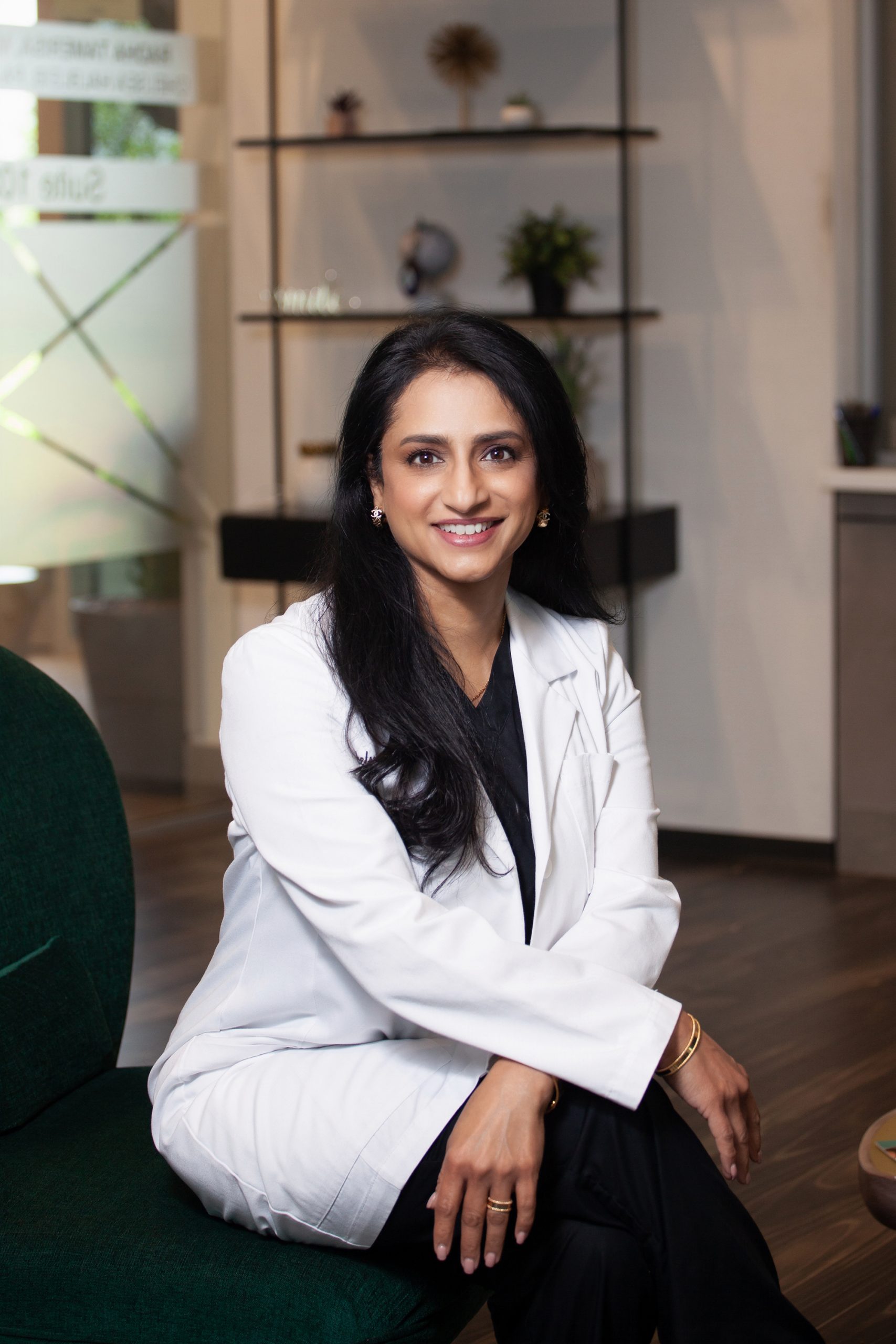
In this month’s Member Spotlight, Radha Tamerisa, MD, MBA, explains why she prefers “integrative gastroenterology” to “functional medicine,” what a typical visit involves, the business gaps that sent her back for an MBA, and what she would tell AGA members thinking about starting a practice of their own.
What led you to start your own practice?
Dr. Tamerisa: I wanted autonomy, the ability to build a practice around what patients actually need, rather than fitting patients into a pre-existing model. Independence also meant I could innovate: bring in diagnostics and program structures that a lot of traditional GI practices don’t offer, and iterate on them as I learn what works, instead of waiting on a larger system to catch up.
Would you describe your practice as functional medicine?
Dr. Tamerisa: I’d actually put it differently. Early on we used “functional medicine” as shorthand, but it doesn’t quite capture what we do; we rewrote how we describe the practice earlier this year to be more precise. What we practice is integrative gastroenterology: mainstream GI care built out with objective, data-driven diagnostics, nutrition as a core part of care, and metabolic and obesity medicine, with genetic testing coming into the picture for rare disease and response to therapies like GLP-1s.
And this isn’t fringe. I was recently at a lecture where an academic GI speaker discussed the use of L-glutamine for IBS, something now being studied and used across mainstream institutions; there’s actually a randomized, placebo-controlled trial published in the journal Gut showing real benefit in postinfectious IBS with diarrhea. I’ve been using it in my own practice for seven years. The field is moving toward this kind of approach; it’s just a matter of when you start.
What does that look like in a typical patient visit?
Dr. Tamerisa: A visit often goes beyond the standard GI workup. Alongside a standard consultation, we can run FibroScan for liver fat and fibrosis, anorectal manometry, breath testing for SIBO and H. pylori, and stool-based diagnostics same-day in-office. Nutrition counseling is built into the visit structure rather than an outside referral, and for patients with a metabolic or weight component, that’s integrated with our obesity medicine program. We’re also expanding into genetic testing, for rare disease where it’s indicated, and increasingly to help predict how a patient might respond to therapies like GLP-1s, so treatment decisions are more personalized from the start.
You’ve added physicians to the practice this year. What were you looking for when you brought them on?
Dr. Tamerisa: We brought on three physicians this year: Dr. Natalia Martin, Dr. Salaah Siddiqui, and Dr. Ruth Bell. What I looked for wasn’t just clinical competence — it was alignment with the integrative philosophy: physicians willing to look further upstream for root causes rather than just manage symptoms, and who wanted to practice in a structure built for that kind of care.
All three have joined AGA. Was that something you encouraged?
Dr. Tamerisa: I did encourage it. I wanted them to see the value of being involved early, both for their own professional growth and for advocacy, so they’d understand early on how much of the future of GI practice gets shaped by physicians who show up and participate, not just by those who sit on the sidelines.
What’s been the hardest part of running an independent practice?
Dr. Tamerisa: The hardest part has been learning the business side itself. Medical training doesn’t prepare you for running a practice: staffing and training infrastructure, credentialing timelines, coordinating across multiple locations and entities. I actually went back and got my MBA a few years ago because I felt that gap directly, and it’s been invaluable since.
What surprised me most was how much of running a practice is systems-building — writing the playbooks, checklists, and protocols so quality doesn’t depend on any one person being in the room.
How do you talk about your approach with GI colleagues?
Dr. Tamerisa: I try to make the point that I’m not all that different from them. I’m conventionally trained and evidence-based, just like any other GI physician. The difference is more about scope than philosophy: I’m willing to implement and test other therapies a bit further upstream, and I’ve been able to see a genuinely good clinical impact on outcomes for my patients as a result.
It also means I actually know the positives and negatives of these therapies firsthand, so when a patient comes in having seen something on social media and wants to talk about it, I can have a real, informed conversation with them instead of dismissing it outright. If I had a narrow mindset, I wouldn’t be able to meet patients where they are on topics they’re genuinely curious about.
Lightning round
What is the biggest misconception about GI or your career?
That GI is just about scopes and symptom management. A lot of what we do now is upstream, metabolic, whole-patient work.
What is the best piece of advice you have been given?
Build the infrastructure before you need it.
What’s a recent breakthrough in the field you’re excited about?
AI and new treatment options for fatty liver disease.
What is your favorite GI organ and why?
The small bowel. It’s the absorption and immune hub of the gut, which ties directly into everything I focus on with nutrition and metabolic health.
What’s your favorite way to unwind?
I like to paint — resin art and textured paints, especially. It’s a nice contrast to the analytical side of medicine. I picked it up during COVID-19, when I suddenly had downtime I wasn’t used to and needed somewhere to put my mind.