A nationwide Swedish study published in Gastroenterology found that colorectal cancer (CRC) risk was highest among patients with inflammatory bowel disease (IBD) who had at least two first-degree relatives with CRC.
The findings raise the question of whether surveillance should prioritize patients with multiple affected relatives, the researchers wrote.
“This is clinically important because current IBD guidelines only emphasize surveillance for patients with a first-degree relative with early-onset colorectal cancer,” first author Åsa H. Everhov, MD, PhD, of Karolinska Institutet in Stockholm, told GI & Hepatology News.
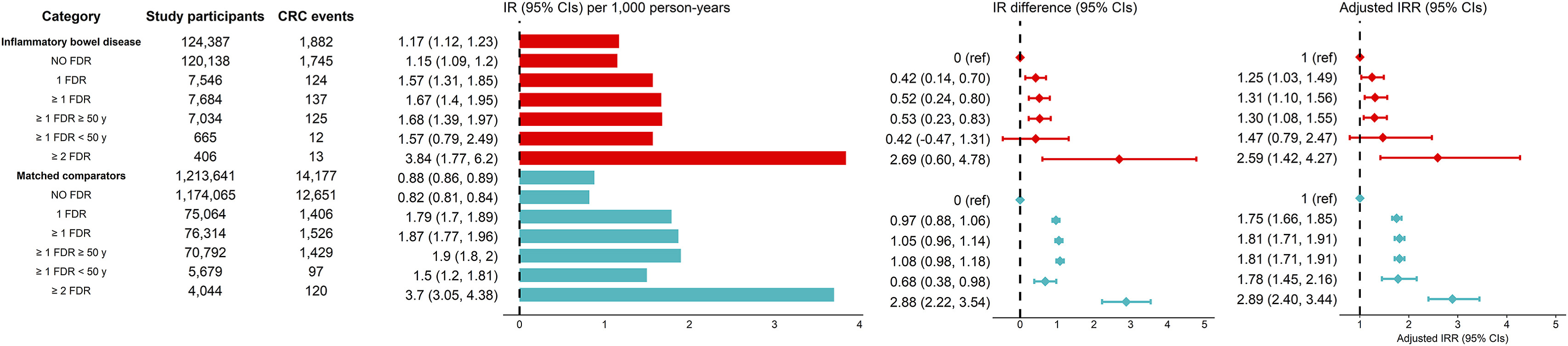
She and her colleagues found that CRC occurred at a rate of 3.84 cases per 1,000 person-years among the 406 patients with IBD who had at least two affected first-degree relatives, compared with 1.15 cases among patients with IBD and no family history. This amounted to 2.69 additional cases per 1,000 person-years.
By comparison, CRC occurred at a rate of 1.57 cases per 1,000 person-years among patients with at least one first-degree relative diagnosed before age 50. This was 0.42 additional cases per 1,000 person-years compared with patients without a family history. The difference was not statistically significant; 12 cancers occurred in this group.
In the register-based matched cohort study, researchers followed patients with IBD in Sweden from 1996 through 2023, excluding those with previous CRC or colectomy. The primary outcome was incident CRC, identified in the national cancer register or listed as a cause of death.
The researchers used nationwide registry data to compare 124,387 patients with IBD with 1,213,641 people from the general population. Each patient was matched with up to 10 people based on age, sex, area of residence, and calendar year.
The cohort included 74,122 patients with ulcerative colitis (UC), 41,062 with Crohn’s disease (CD), and 9,203 with IBD unclassified at diagnosis. Patients had a median age of 41 at diagnosis, 49% were women, and the median follow-up was 11 years.
Family history was based on the number of parents, siblings, or children diagnosed with CRC and whether any were diagnosed before age 50. Researchers updated family history throughout follow-up as relatives received a diagnosis.
Overall, 1,882 patients with IBD developed CRC, for a rate of 1.17 cases per 1,000 person-years. Among the comparators, 14,177 developed CRC, for a rate of 0.88 cases per 1,000 person-years. About 6% of each group had at least one affected first-degree relative.
Compared with patients with IBD who had no family history, those with at least two affected first-degree relatives had 2.59 times the CRC rate. Those with a relative diagnosed before age 50 had 1.47 times the rate, but the difference was not statistically significant.
CRC rates were highest among patients with at least two affected relatives in both major IBD subtypes. They reached 3.15 cases per 1,000 person-years in CD, based on three cancers, and 4.08 in UC. However, only the increase among patients with UC was statistically significant.
When patients with IBD were compared with people from the general population who had the same family history, CRC rates were similar across all but one category. Among those without an affected first-degree relative, patients with IBD had 1.41 times the CRC rate of comparators, an excess driven largely by UC, the authors reported.
Any family history was associated with a similar absolute increase in CRC incidence in patients with IBD and comparators, the authors reported. On the relative scale, the association was weaker in IBD (hazard ratio, 1.31 vs. 2.09 in comparators), which the authors said is expected when baseline risk is already elevated. They cautioned against over-interpreting that difference within individual risk groups — it was not statistically significant for patients with at least two affected relatives or an early-onset relative, and events in those groups were limited.
The pattern held, the authors reported, in four sensitivity analyses. Researchers excluded patients with possible Lynch syndrome, ended follow-up at a diagnosis of primary sclerosing cholangitis, counted high-grade dysplasia in both the family-history and outcome definitions, or excluded the first year of follow-up. When the analysis was limited to patients eligible for IBD surveillance, the rate ratio for at least two affected relatives remained the highest but was not statistically significant.
The authors noted limitations including possible errors in classifying the extent and location of IBD, incomplete endoscopy data, and differences in cancer detection between groups. Family history may also have been underestimated in younger patients whose siblings or children had not yet reached the ages when CRC typically develops. In addition, nationwide CRC screening was not fully implemented in Sweden during the study period.
The Swedish Research Council and other Swedish organizations supported the study. Several of Dr. Everhov’s coauthors reported relationships with pharmaceutical and medical technology companies.

Expert insight
Dr. Everhov shared her perspective on the findings with GI & Hepatology News.
Should having two or more first-degree relatives with colorectal cancer change surveillance intervals for patients with IBD?
Dr. Everhov: We suggest that future guidelines prioritize surveillance in this group. Patients with two or more affected first-degree relatives consistently had the highest cancer incidence among the family-history groups. This pattern remained in several sensitivity analyses, for instance when excluding possible Lynch syndrome, and in analyses incorporating high-grade dysplasia.
Why did a family history of early-onset colorectal cancer appear to confer less risk than current guidelines suggest?
Dr. Everhov: There are several explanations. Our study included an IBD population with less severe disease than the hospital cohorts underlying some of the older evidence. Other differences include better IBD management, modern medical therapies, and more widespread surveillance. Colorectal cancer incidence in IBD has decreased over calendar time. When the baseline risk is lower, the relative contribution of a particular risk factor can also change.
Which patients with IBD and a family history of colorectal cancer might safely undergo less frequent colonoscopy?
Dr. Everhov: The study does not directly identify a group in whom less frequent colonoscopy has been proven safe, so I would avoid making a definitive recommendation based on these data alone. That said, it is possible that patients with only one first-degree relative with early-onset colorectal cancer and no other IBD-related risk factors do not require the same degree of intensified surveillance currently recommended by ECCO and AGA. Surveillance decisions should still consider IBD phenotype and risk factors such as disease extent, disease duration, primary sclerosing cholangitis and previous dysplasia.
Is there anything else you’d like to say about this work?
Dr. Everhov: The study highlights the difference between relative and absolute risk. The absolute colorectal cancer incidence was similar in IBD and the general population comparators in individuals with a family history of colorectal cancer, but higher in IBD than in the comparators among those without family history. The contribution of family history, i.e., the relative effect of family history was therefore smaller in IBD.