Patients with resectable gastric or gastroesophageal junction adenocarcinoma lived longer when durvalumab was added to chemotherapy before and after surgery, according to the final overall survival analysis of the phase 3 MATTERHORN trial, published in The Lancet.
At three years, 69% of patients assigned to durvalumab were alive vs. 62% of those assigned to placebo. Adding durvalumab lowered the risk of death during follow-up by 22%, a statistically significant reduction. The authors wrote that perioperative durvalumab plus chemotherapy is a new standard treatment option.
"Importantly, the study also demonstrated that improvements in pathologic response translated into improvements in event-free and overall survival," first and corresponding author Yelena Y. Janjigian, MD, chief of the gastrointestinal oncology service at Memorial Sloan Kettering Cancer Center, New York, told GI & Hepatology News.
The trial evaluated durvalumab, an antibody targeting programmed death-ligand 1 (PD-L1), added to FLOT, a chemotherapy regimen of fluorouracil, leucovorin, oxaliplatin, and docetaxel. The combination has been approved in the U.S. for adults with resectable gastric or gastroesophageal junction adenocarcinoma, the authors noted.
For the double-blind trial, researchers randomly assigned 948 adults at 147 centers in 20 countries to receive durvalumab or placebo plus FLOT. Patients had untreated stage II-IVA cancer that could be removed surgically, with no spread to distant organs or the lining of the abdominal cavity. The median age was 62 years, and 72% were men. Patients received durvalumab 1,500 mg or placebo intravenously every four weeks plus FLOT every two weeks for four cycles — two before and two after surgery — followed by durvalumab or placebo every four weeks for 10 more cycles.
Overall survival was a key secondary outcome. Earlier results showed that durvalumab improved the trial's main outcome, event-free survival, which measured time until cancer progression, recurrence, or death under predefined criteria. Those earlier results also showed a pathologic complete response, meaning no living cancer cells remained in the primary tumor or removed lymph nodes, in 19% of patients assigned to durvalumab vs. 7% assigned to placebo.
After a median follow-up of about 43 months, 160 patients assigned to durvalumab and 192 assigned to placebo had died. At two years, 76% vs. 70% were alive. Median overall survival had not been reached, meaning estimated survival in each group had not fallen below 50%.
Overall survival favored durvalumab across most clinically relevant subgroups, the authors reported. The benefit appeared greater among patients with clinically node-positive disease, while the node-negative subgroup showed no difference between groups; the difference between the two subgroups was not statistically significant. In a post hoc exploratory analysis by histology, the hazard ratio for patients with diffuse-type tumors was 0.98, compared with 0.76 for intestinal-type tumors (a ratio of 1.0 indicates no difference between groups). The authors noted that histologic subtype was not centrally confirmed and that the trial was not powered for individual subgroup comparisons.
The authors reported numerical improvements in overall survival with durvalumab among patients with PD-L1 expression of 1% or higher and among those below 1%, although the latter group included only 95 patients (10% of the trial). Results were similar when researchers excluded patients with microsatellite instability-high tumors.
In post hoc exploratory analyses limited to patients who completed surgery, event-free survival numerically favored durvalumab among patients with and without a pathologic complete response, the authors reported. Among patients with no pathologic response — 10% of those analyzed in the durvalumab group and 16% in the placebo group — the hazard ratio of 1.27 did not favor durvalumab. Among patients whose lymph node samples could be assessed, 58% assigned to durvalumab vs. 45% assigned to placebo had no cancer in those nodes at surgery.
Grade 3 or 4 adverse events occurred in 72% of patients receiving durvalumab vs. 71% receiving placebo. Serious adverse events affected 48% vs. 44%, and immune-mediated events occurred in 23% vs. 7%. Adverse events caused 30% vs. 23% to stop at least one trial treatment. Six deaths in the durvalumab group and two in the placebo group were considered possibly related to treatment.
Adding durvalumab did not interfere with surgery, the authors reported. Among patients who completed surgery, 92% in each group had their tumors removed with no cancer cells at the edges of the removed tissue.
The authors noted several limitations, including local assessment of tumor type and lymph node involvement without mandatory endoscopic ultrasound or staging laparoscopy. Surgical specimen analyses excluded patients who did not complete surgery, potentially favoring those with better prognoses. Event-free survival estimates among patients with a pathologic complete response relied on only 11 events. Response criteria are not universally used. Enrollment included no patients from China and few Black patients, which the authors said might limit generalizability.
The authors described managing patients with little or no pathologic response as an important remaining challenge. Citing data from the VESTIGE study, they noted that routinely switching away from FLOT-based regimens in nonresponders might be associated with worse outcomes. "Until further evidence is available, continuation of adjuvant therapy remains the standard approach in patients who are fit to proceed," they wrote.
AstraZeneca funded the study and had a role in its design, data collection, analysis, interpretation, and writing of the report. Dr. Janjigian disclosed consulting, honoraria, travel, and advisory relationships with AstraZeneca. Several coauthors reported industry relationships; four were AstraZeneca employees, three of whom held company stock.
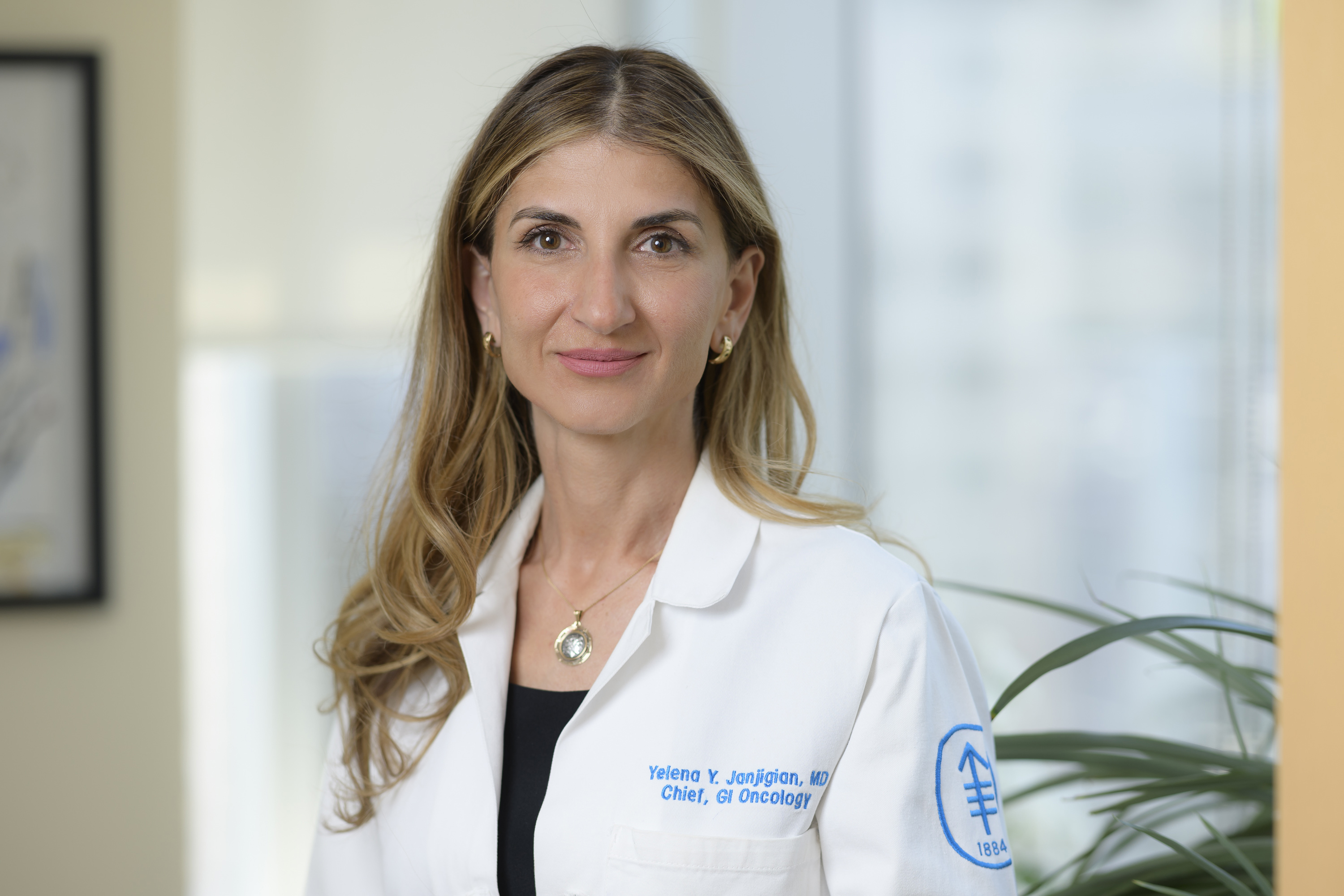
Expert insight
Dr. Janjigian highlighted the study's implications for patient care.
Which patients with resectable gastric or gastroesophageal junction cancer are most likely to benefit from adding durvalumab to FLOT?
Dr. Janjigian: Patients with localized, nonmetastatic gastric or gastroesophageal junction adenocarcinoma who are candidates for curative-intent surgery and perioperative FLOT should be considered for durvalumab. The benefit was observed irrespective of PD-L1 expression. In practice, patients who are sufficiently fit to complete the planned neoadjuvant treatment, undergo definitive surgery, and receive postoperative therapy have the greatest opportunity to derive the full benefit of the perioperative approach.
Do the findings support using durvalumab regardless of PD-L1 expression, or should biomarkers still guide treatment selection?
Dr. Janjigian: The benefit of durvalumab was observed regardless of PD-L1 expression, so PD-L1 should not currently be used to select patients for this approach. Additional biomarkers may ultimately help refine treatment selection, but none are sufficiently validated at this time to guide routine use of perioperative durvalumab.
Should pathologic response and lymph node status after surgery influence postoperative treatment or surveillance?
Dr. Janjigian: Not at this time. There is currently insufficient prospective evidence to tailor postoperative therapy based on pathologic response or final lymph node status at surgery. Although patients with residual disease are at higher risk for recurrence and may potentially benefit from additional treatment, we do not yet have data showing that therapy should be escalated for nonresponders or de-escalated for patients who achieve a pathologic complete response. Future studies should specifically address whether postoperative treatment can be individualized according to pathologic response, nodal status, or other measures of residual disease.