Every gastroenterologist knows the patient: the scope is clean, the labs are unremarkable, and the symptoms persist. Meanwhile, colonoscopy reimbursement continues to decline, GLP-1 prescribing has made weight management and nutrition unavoidable in the GI clinic, MASLD occupies a growing share of the schedule, and patients are spending heavily on gut health outside the medical system. Together, those pressures are forcing practices to reconsider what GI care should include and how to make that care financially sustainable.
Supriya Rao, MD, DABOM, DABLM, is managing partner at Integrated Gastroenterology Consultants, the largest independent private GI practice in Massachusetts, and a clinical assistant professor at Tufts University School of Medicine. Board-certified in internal medicine, gastroenterology, obesity medicine, and lifestyle medicine, she built her group's metabolic health program inside a conventional insurance-based practice, anchored on shared medical appointments.
Vivian Asamoah, MD, is an integrative gastroenterologist and founder of Houston Gastro Institute in Katy, Texas. After GI fellowship at Johns Hopkins and certification through the Institute for Functional Medicine, she split the practice into two entities: insurance-based conventional GI, and a direct-pay integrative and functional medicine arm.
Both spoke with GI & Hepatology News about what building that care actually required. Their responses have been edited and condensed for length and clarity.
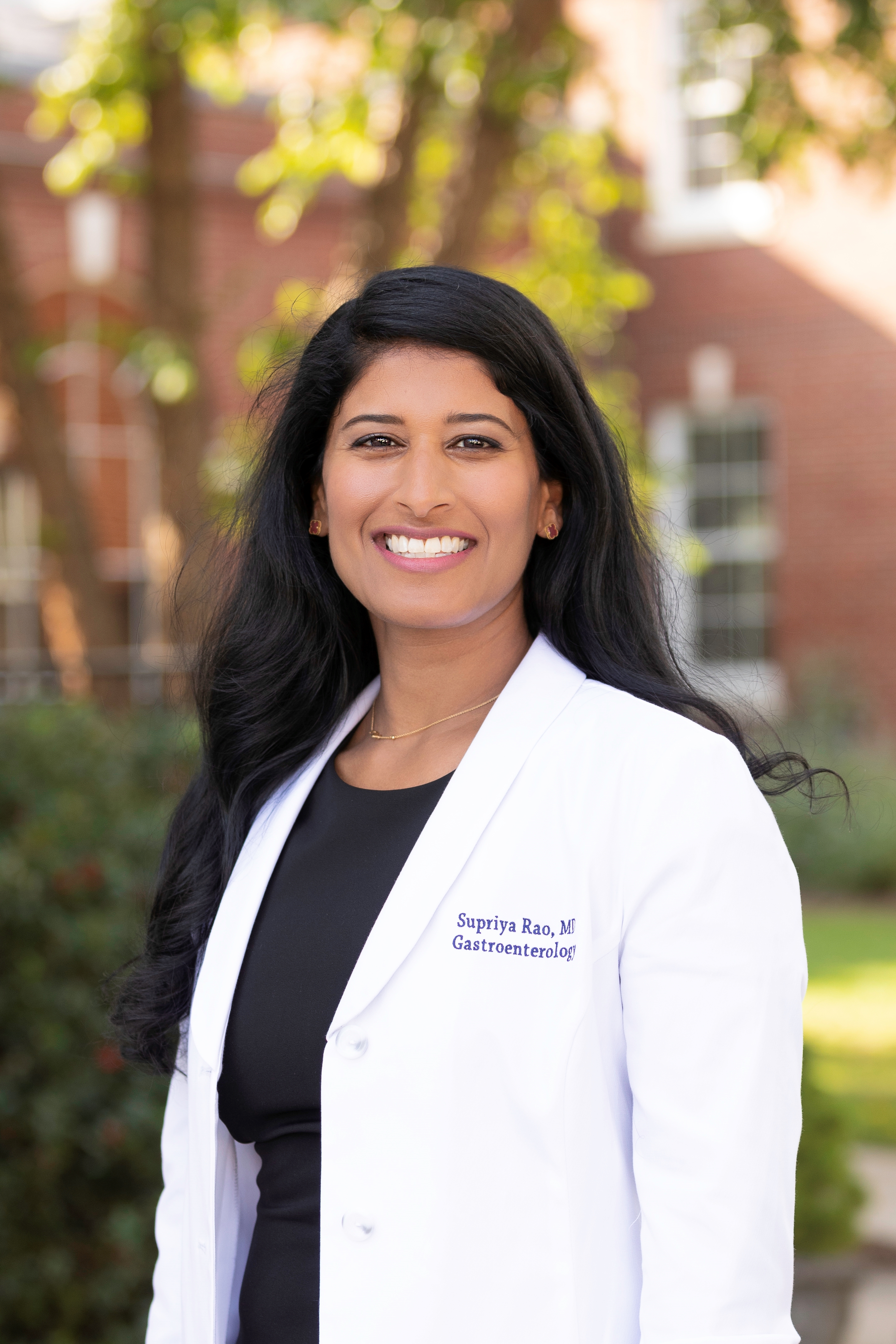
What made you decide to build out gut health, metabolic, and lifestyle care, when a GI practice's identity and economics have traditionally run through procedures?
Dr. Rao: Don't get me wrong — I still do a lot of procedures, and I'd say I'm still heavily skewed toward procedural volume. Procedures are great for diagnosing structural disease, screening for colon cancer, intervening in acute crises, and looking for inflammatory bowel disease. Early in my career, I was focused on getting really good at endoscopy and colonoscopy. But as time went on, I found myself scoping lots of patients with functional disorders, reflux symptoms, fatty liver — only to tell them everything is normal, all of your procedures are normal, while they were still having significant symptoms. The economics of running a GI practice run through the endoscopy suite and colonoscopy reimbursement, and there was this huge gap in care. Patients were coming to us saying, I'm having all these problems. We'd do the procedure. They were still having the problems. We didn't have a great plan for any of them.
So I started thinking: obviously something else is driving this. There have to be metabolic and lifestyle factors here. I convinced myself that in order to truly become better clinically, I needed to understand overall metabolic and gut health. In 2018, I went to my first obesity medicine conference — the Harvard Blackburn course — and I was shook. There was so much information there I knew nothing about. GI is a good springboard for this work: fatty liver and the metabolic diseases associated with it, plus reflux and functional disease, are all affected by obesity and lifestyle.
Dr. Asamoah: Endoscopy is essential. I perform procedures two to three days every week, and I take enormous pride in high-quality screening and diagnostics. But very early in practice, I kept running into the same wall: patients whose scopes and labs were normal, who were still sick. IBS, bloating, reflux, fatigue, food reactions, a lot of autoimmune conditions — and they really felt it was connected to their gut. All I could say was, your scope is normal. That's it. I could tell them what they didn't have, but I couldn't always tell them what to do next. Conventional GI training, even at the fellowship level, gave me very few tools for that conversation.
That gap is what pushed me toward integrative and functional medicine — not to replace conventional gastroenterology, but to extend it. Nutrition, the microbiome, sleep, stress physiology, and lifestyle are not adjacent to GI; they are GI. The science on the gut-brain axis and diet-microbiome interactions has only strengthened that conviction.
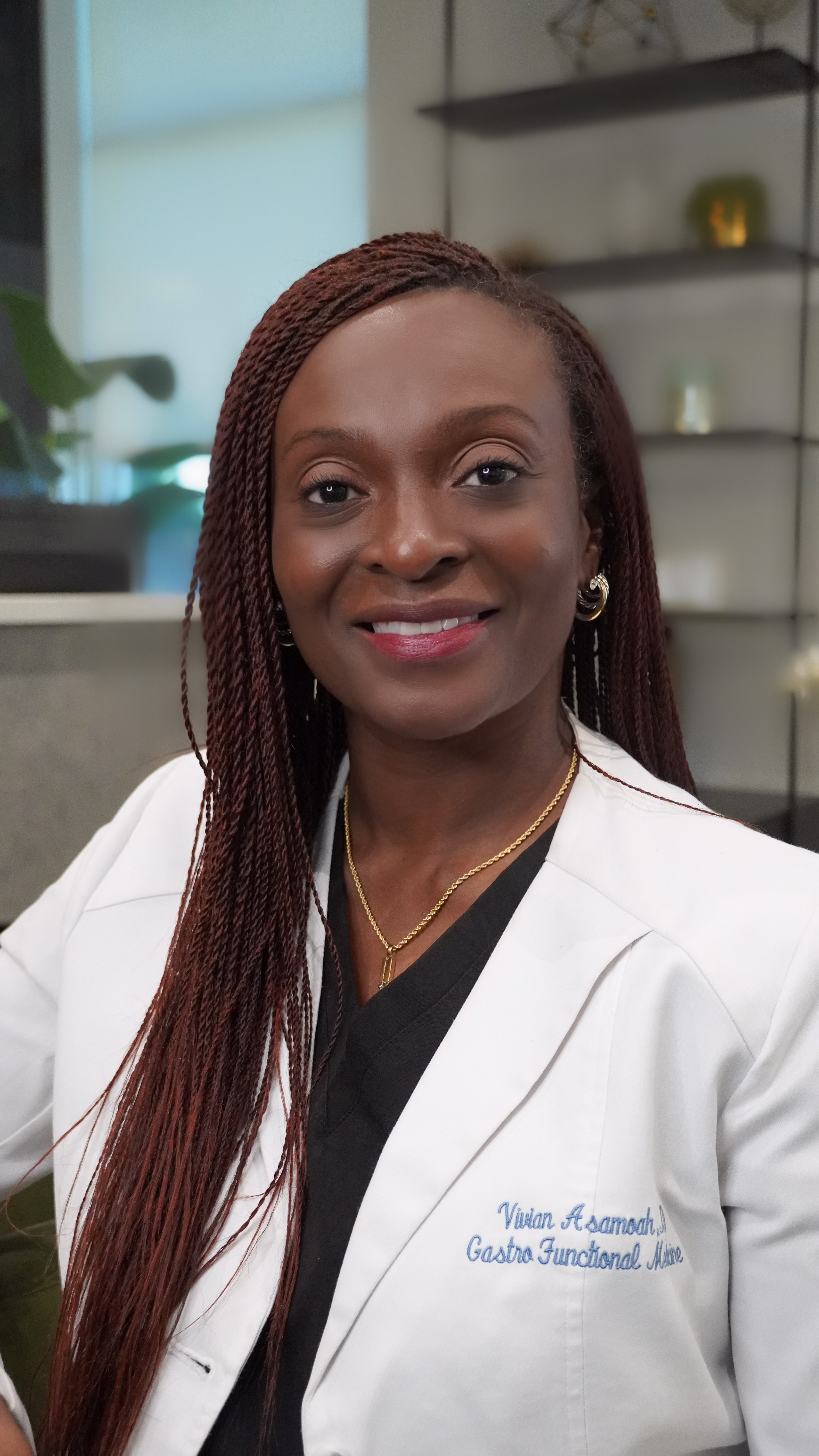
What did it take to actually stand up a gut-health service line — staffing, referrals, and buy-in?
Dr. Rao: This began as a side interest, but I realized it was something that could benefit the practice if we could pilot it and then scale it. That took buy-in from my partners. I told them, look, I'm not going to be doing something in the wild, wild west — I'm going to get board certified; I'm going to be able to say I understand the metabolic consequences of all these things. You don't necessarily need to get board certified, but I felt I had to, otherwise I wasn't legit. I had to demonstrate that obesity medicine and lifestyle medicine weren't some soft add-on, but a clinical necessity that could also be financially viable.
Over time I started flirting with the idea of shared medical appointments — seeing 15 to 20 patients in a group, but being able to spend an hour with them and dig deeper. People have questions like, how much protein should I be eating? Should I be taking some peptide I got off the internet from a gym bro? Those are things we don't have time to dive into in a regular GI appointment, but we can spend 10 or 15 minutes on them in an hour-long shared appointment — and one person's question is usually somebody else's question too. The revenue on that was a no-brainer for my partners.
Dr. Asamoah: My situation is different from the typical group practice, and that's worth being honest about. I built Houston Gastro Institute as an independent, physician-owned practice more than a decade ago, so I don't answer to a hospital, to private equity, or to an institution. I didn't need partner buy-in. What I needed was patient buy-in and payor reality-testing, and those turned out to be the harder and more instructive problems.
The staffing piece came first. A nonendoscopic service line lives or dies on the team around the physician. We invested in four superb registered dietitians and trained advanced practice clinicians, and we built structured programs rather than one-off counseling visits — group nutrition visits, and defined programs for gut health and restoration, including what we call our Leaky Gut Program. The physician stays central, and patients are under my direct oversight, but the dietitian-led components are what make the model scalable and affordable.
Eventually I separated the work into two entities. The insurance-based GI practice handles conventional gastroenterology, including the nutrition services payors do reimburse — group nutrition visits and medical nutrition therapy among them. The integrative and functional medicine practice operates on a direct-pay model, because much of that work — extended visits, advanced testing interpretation, longitudinal coaching — simply isn't reimbursed adequately. I'd rather be transparent about that than pretend the current payment system supports this care, because it largely doesn't.
Referrals were the easiest part, honestly. Once patients experienced this model, they told other patients and their doctors.
What's the clinical through-line that connects gut, weight, metabolism, and lifestyle into one program rather than separate add-ons?
Dr. Rao: When I think about it, I think about the gut-brain-microbiome axis. These are not separate systems; they're all integrated into one, and gastroenterologists really need to capitalize on that. We are perfectly poised to take care of these patients.
Excess weight, excess adiposity, and metabolic syndrome drive systemic inflammation, and when your body has that inflammation, it manifests in the gut as changes in motility — constipation, diarrhea, IBS-type symptoms — as dysbiosis, as abdominal pain and visceral hypersensitivity, as fatty liver. We can't effectively treat those issues unless we're looking at insulin resistance and cholesterol. We can't manage severe IBS without looking at what a person is eating. Are they exercising? Are they sleeping well? Are they stressed out all the time? Treating those as separate silos ignores true physiology.
Bringing gut health, weight, metabolism, and lifestyle medicine under one roof lets us treat the entire metabolic engine rather than patching up a car here and there. Obviously we still individualize it — it's not one-size-fits-all — but we're looking at the patient as a whole person, as opposed to, we're here to do your EGD and colonoscopy, and once that's done, go back to your PCP.
Dr. Asamoah: The through-line is that these are not separate organ systems with separate problems — they're one interconnected physiology. The gut microbiome influences metabolic signaling, satiety hormones, inflammation, and even mood. Insulin resistance and fatty liver disease walk into a GI clinic every single day. Sleep apnea has direct GI consequences. You cannot meaningfully treat MASLD without addressing metabolism, and you cannot address metabolism without addressing diet, sleep, movement, and stress.
In our practice that thinking is organized under a framework I call The Complete Gut Approach: Explore, Investigate, Restore, Re-Center. Explore is a deep history — food, sleep, stress, medications, life context. Investigate is appropriate testing, both conventional and, where evidence supports it, advanced functional testing. Restore is targeted intervention: medical, nutritional, and lifestyle. Re-Center is maintenance, helping the patient sustain change rather than cycling back.
What I'd push back on is the idea that you can put it all in one bucket and develop one big program that everybody goes into. We're moving toward an evolution of care that is very personalized. Look at the disparities by gender alone — a woman's GI tract is very different from a man's, in terms of nutrition and in terms of where she is in her life and her health span. Is she perimenopausal? To bundle everyone into one gut health program that's going to fix everyone under one model, I don't think that will work. There are certain themes you can teach — whole foods, avoid ultra-processed foods — but beyond that, there has to be personalization of care.
How sustainable is a gut-health and metabolic service line inside a GI practice, and what would make it easier to build?
Dr. Rao: The current fee-for-service model still disproportionately rewards procedures and procedural volume over what you could call cognitive or lifestyle care — sitting with a patient and talking to them at length. What would make it easier is clearer reimbursement pathways and broadened insurance coverage for the medications. One thing that's crazy to me is that nutritionists often aren't covered by insurance. You're willing to pay for a gastric bypass for this patient, but not a nutritionist? That's beyond me.
Dr. Asamoah: I'll be direct: under current reimbursement, a nonendoscopic line is sustainable, but not on fee-for-service physician time alone. What makes ours work is a mix of models — reimbursed services like group nutrition visits and dietitian-delivered medical nutrition therapy, team-based care that doesn't require physician time for every touchpoint, structured self-paced patient programs, and a direct-pay integrative and functional medicine arm for the work insurance won't cover.
The group model is the key to the economics. If you onboard 20 or 30 patients into one group and you're billing an hour for 30 patients, that's a whole day's worth of visits done in an hour. And obesity is an epidemic, so you will have the patients. You can build around it — fatty liver evaluation with elastography, blood work every three months for patients with metabolic syndrome to document what you're reversing.
What would make it easier? Three things. First, reimbursement that reflects cognitive and preventive work: adequate payment for prolonged visits, intensive lifestyle intervention, and dietitian services across more diagnoses. Second, value-based arrangements — MASLD, IBS, and obesity-related disease are exactly where prevention saves money downstream, and ACO and risk-sharing models could recognize that. Third, training. Most GI fellows graduate with almost no formal education in nutrition, the microbiome, or lifestyle medicine, which means every practice that wants to do this has to build the expertise from scratch.
I'd also caution against overpromising. This is not a get-rich model, and it shouldn't be sold that way. It's a patient-retention, patient-outcome, and physician-fulfillment model that can be made financially sound with deliberate structure.
What would you tell a GI group that wanted to build a gut-health service line, and where do you see this model heading?
Dr. Rao: If you're interested in doing something like this, you need to start with a champion. For my group, that was me. In 2019, it seemed fringe — treating obesity, seeing patients for it. Now everyone knows somebody who's been on a GLP-1 in some fashion. You're not trying to force a practice to completely change its model overnight. Identify one person who's passionate about metabolic health, give them the time and bandwidth to get certified if that feels necessary, and build a pilot.
I started with a pilot shared medical appointment of 15 people in September 2022. It was successful not just in the sense that patients loved it, but in the metrics — decreases in blood pressure, decreases in hemoglobin A1c, improvement in the quality-of-life scores we gave patients. And the billing worked out. We've now taken care of thousands of patients in that program. We can start as gastroenterologists by just capturing the patients we're already seeing, because a lot of them already have these issues and would love to have someone to talk with about it.
I obviously love doing procedures. But with reimbursements for colonoscopy going down a little every year, I don't think the practices that thrive in the coming years are going to be the ones relying solely on procedures. They need to be comprehensive digestive and metabolic health destinations — places where people go because they feel heard.
Dr. Asamoah: Start smaller than you think. Don't announce an "integrative program." It starts with great collaborations — one good registered dietitian in your area whose philosophy aligns with yours, embedded in your clinic, and a GI psychologist you can align with. Then build one structured offering around one condition you see constantly, whether that's IBS, MASLD, or post-infectious gut dysfunction. Not all three at once; you can't lump those together and call it gut health, because your outcomes will be different. Measure the outcomes. Let the results build the case before you scale. It could be one, two, three people, and in a year or two it could be a full-fledged team with different groups and programs.
Second, protect the science. Integrative and functional medicine has a credibility problem in some corners of our field, sometimes deservedly. Nutrition, lifestyle, integrative, functional, holistic — whatever you want to call it, it's still medicine, and I believe it should be led by physicians who have studied medicine. It must be evidence-informed. Hold this work to the same evidentiary standard as everything else we do, be willing to say "we don't have data for that," and keep the physician clinically accountable for the whole program.
Third, decide honestly what payor model each service belongs in. Trying to force unreimbursed work through insurance-based scheduling burns out staff and shortchanges patients.
As for where this is heading: I think the distinction between "GI care" and "metabolic and lifestyle care" is going to collapse over the next decade. MASLD is becoming the leading indication for liver transplant. The microbiome is moving from research curiosity to clinical tool. GLP-1 therapies have already forced every gastroenterologist to think about weight, nutrition, and their GI side effects. The practices that build the team and the framework now won't be adding a service line — they'll be positioned for what gastroenterology is becoming.